
Disinfecting Wipes for Dental Clinics in Canada What You Need to Know

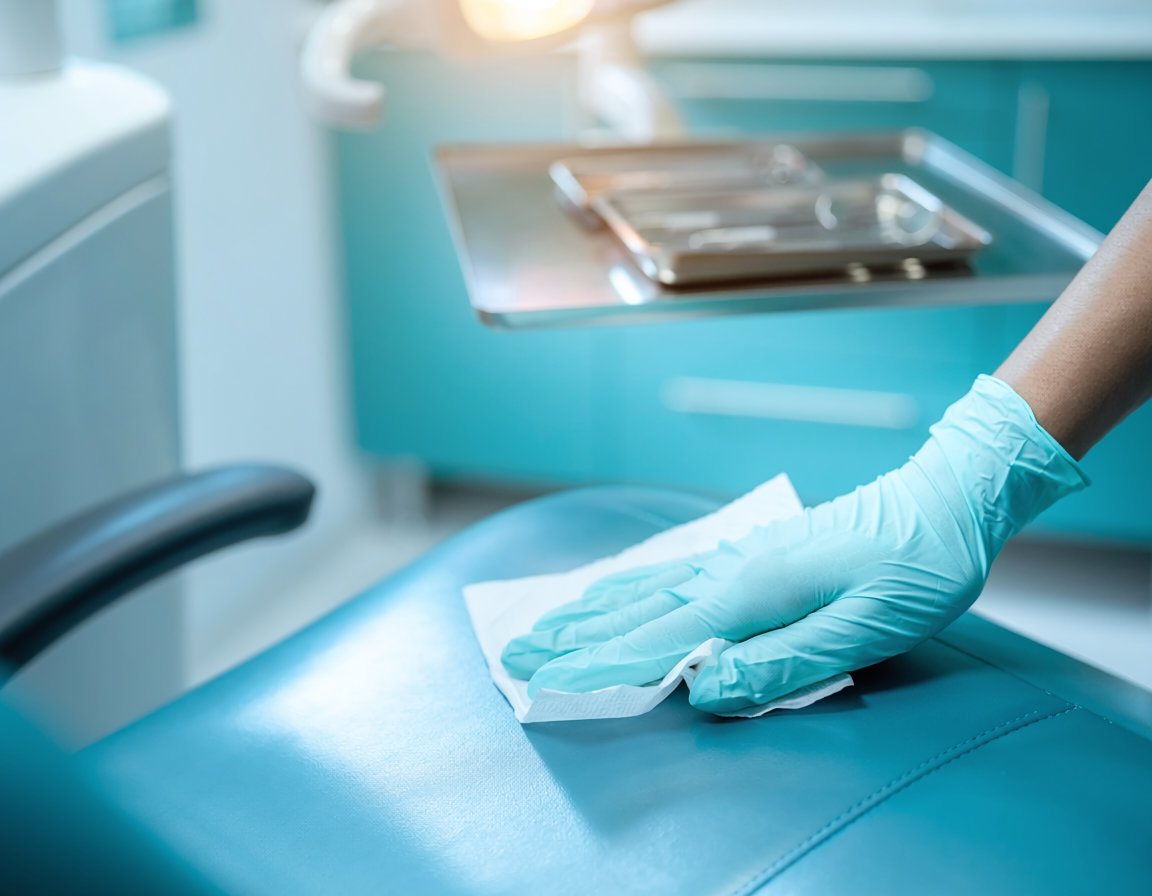
Surface disinfection in a Canadian dental clinic is not a housekeeping task it is a regulated infection control procedure with specific product requirements, defined protocols, and documentation obligations that are subject to review by provincial dental regulatory bodies. Getting it right protects patients, protects staff, and protects the practice from the compliance exposure that comes with using the wrong product or following an incomplete protocol.
This guide covers what Canadian dental clinics actually need from a surface disinfecting wipe, grounded in the IPAC framework that governs dental practice across Canada. It includes the Spaulding classification applied to dental surfaces, the Health Canada DIN requirement, the double-wipe protocol, and a practical surface and frequency checklist that can be used directly in your operatory turnover procedure.
The Canadian IPAC Framework for Dental Clinics
Infection Prevention and Control (IPAC) standards for Canadian dental practices are set at multiple levels: Health Canada and the Public Health Agency of Canada (PHAC) establish the national framework; the Canadian Standards Association (CSA) publishes device reprocessing standards that dental colleges reference; and provincial dental regulatory bodies the RCDSO in Ontario, the CDSA in Alberta, the CDSBC in British Columbia, and their equivalents across provinces set jurisdiction-specific Standards of Practice that carry regulatory weight.
All of these frameworks converge on a common set of requirements for environmental surface disinfection: the product used must be a registered disinfectant with a Health Canada DIN, it must be used according to the Manufacturer’s Instructions for Use (MIFU), and its use must be documentable as part of the clinic’s infection control record. The Oasis Discussions dental professional resource is explicit on this point: in Canada, the DIN is what guarantees a surface disinfectant meets Health Canada’s Food and Drugs Act standards and can be trusted for use in a dental operatory.
Provincial regulatory bodies have the authority to audit dental clinic infection control practices. During an RCDSO inspection or equivalent provincial review, the disinfecting products used in the clinic, their DIN numbers, and the protocol documentation are all subject to review. A practice that cannot produce this documentation or that uses an unregistered product for operatory surface disinfection has a compliance gap that creates regulatory and liability exposure.
The Spaulding Classification Applied to Dental Surfaces
Understanding which surfaces in a dental clinic require what level of disinfection prevents two common mistakes: over-treating surfaces that only need routine cleaning, and under-treating surfaces that need proper disinfection. The Spaulding classification the same framework introduced in Post #8 divides dental items and surfaces into three categories:
Classification | Dental examples | Required process | Wipes applicable? |
|---|---|---|---|
Critical | Surgical instruments, burs, extraction forceps, needles | Sterilization (autoclave) | ✗ No autoclave or heat sterilization required |
Semi-critical | Dental mirrors, impression trays, amalgam condensers, ultrasonic tips | High-level disinfection or sterilization | ⚠ Only if sterilization not possible and HLD solution used |
Non-critical (environmental) | Treatment chairs, bracket tables, light handles, counter surfaces, door handles, phones, debit terminals | Intermediate-level surface disinfection | ✓ Yes registered surface disinfectant wipe is the correct tool |
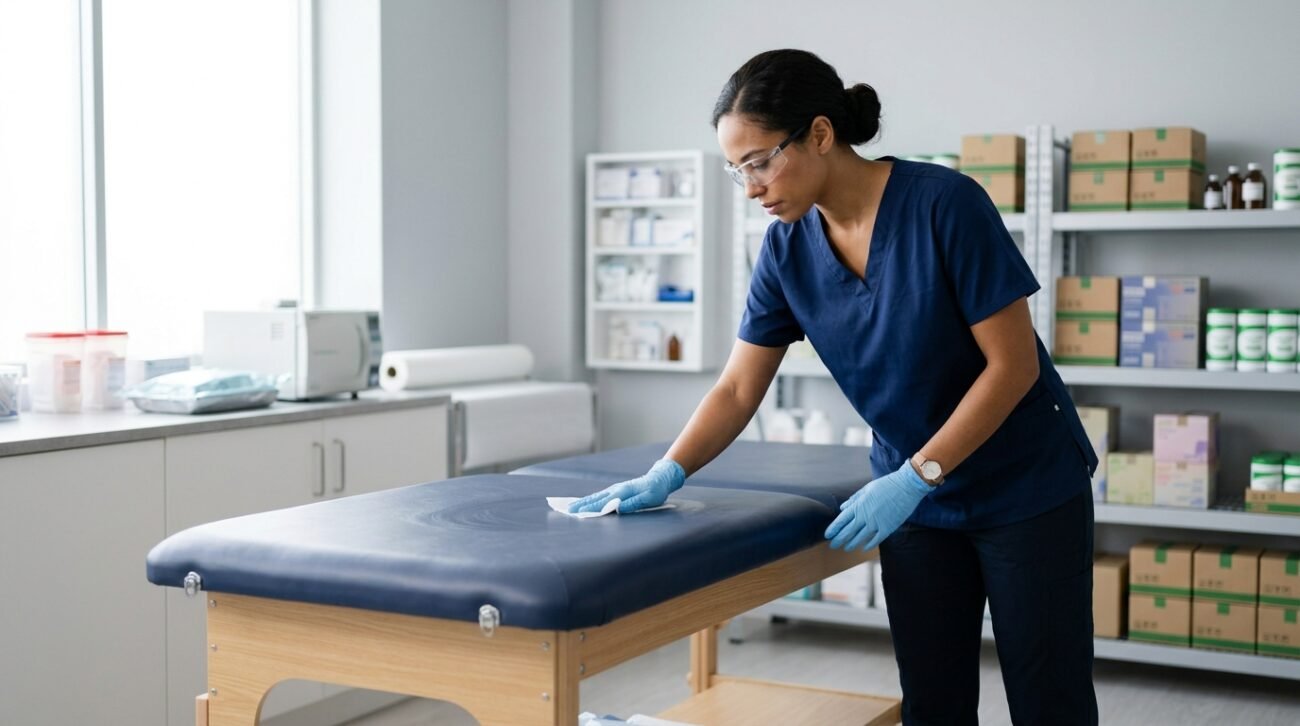
The practical takeaway: the majority of between-patient operatory cleaning in a dental clinic wiping down the chair, bracket table, light handles, counter surfaces, and contact points is intermediate-level environmental surface disinfection, handled correctly with a registered surface disinfectant wipe. This is a different task from the reprocessing of instruments and semi-critical equipment, which has its own separate protocol chain involving enzymatic cleaning and autoclave sterilization.
The Double-Wipe Protocol: The Correct Surface Disinfection Sequence
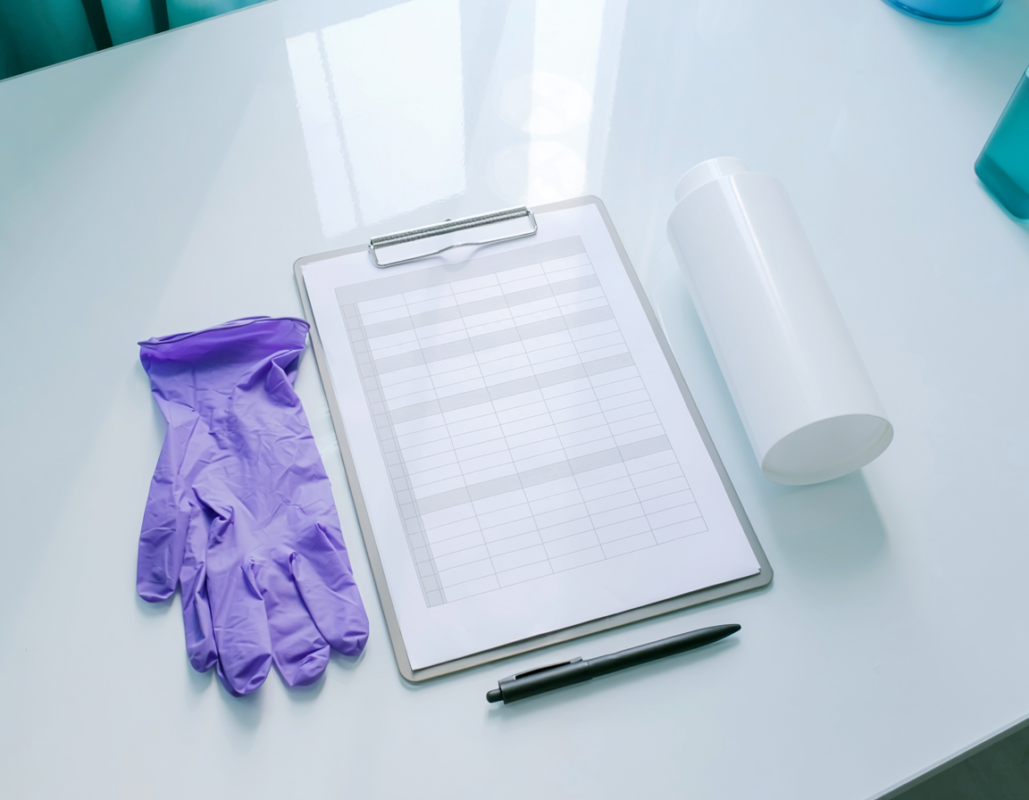
The double-wipe protocol is the standard for environmental surface disinfection in Canadian dental operatories and is explicitly referenced in multiple provincial dental college infection control standards. The sequence has a specific purpose at each step, and the two wipes are not interchangeable:
- First wipe clean The first pass with a fresh wipe physically removes visible debris, blood, saliva, and surface contamination. This step is cleaning, not disinfecting. Its purpose is to remove the organic material that would otherwise block the active ingredient in the second wipe from reaching the surface and achieving contact.
- Allow to dry After the first wipe, allow the surface to air dry briefly before the second wipe. This step ensures the cleaning pass is complete and the surface is ready for the disinfecting contact.
- Second wipe disinfect The second pass with a fresh wipe delivers the registered disinfectant to the clean surface and must remain visibly wet for the labeled contact time to achieve the kill claim. This is the step that constitutes disinfection and it only works correctly on a surface that has been cleaned first.
The double-wipe is a two-wipe minimum per surface per patient turnover. Using a single wipe and expecting both cleaning and disinfection from one pass is not compliant with the protocol and is likely to achieve neither job fully, particularly on surfaces that have visible contamination from a procedure.
Why the Health Canada DIN Is Non-Negotiable for Dental Use
A surface disinfectant used in a Canadian dental operatory must carry a Health Canada Drug Identification Number. This is not a preference it is the regulatory standard that all provincial IPAC frameworks for dental practice reference. The DIN confirms that the product has been tested, its kill claims have been verified to Health Canada’s standard, and it can legally make the disinfectant claims on its label.
Using a product without a DIN in a dental operatory regardless of how it is marketed, what certifications it carries, or how widely used it may be in household settings creates a documented compliance gap. If a patient infection event occurred and the products used during clinic surface disinfection were reviewed, an unregistered product would represent a failure of protocol with significant liability implications.
The DIN check takes seconds: it is a number printed on the product label that can be verified against the Health Canada drug product database. For any product under consideration for use in a Canadian dental operatory, the DIN check should be the first step in the evaluation, before contact time, price, or format.
What Dental Clinics Are Looking for in a Surface Disinfecting Wipe
Beyond DIN registration, the operational requirements of a dental clinic create specific criteria for a surface disinfecting wipe that differ from household or general commercial use:
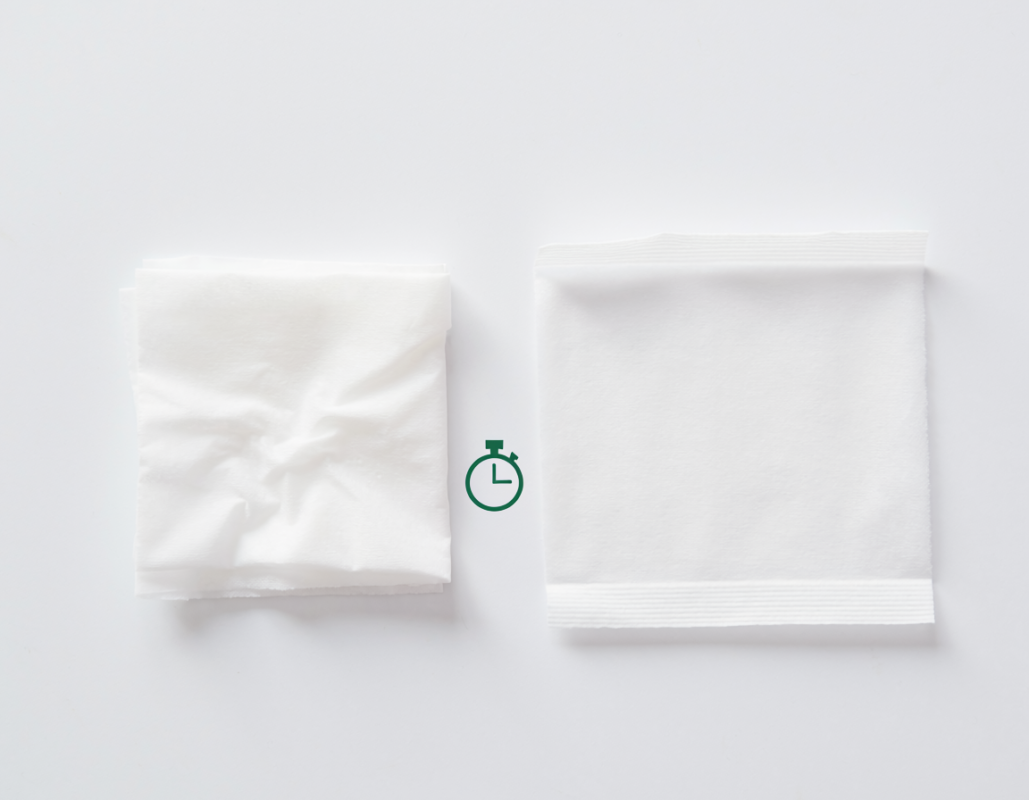
- Short, reliable contact time Between-patient chair turnover in a busy dental practice operates on a tight schedule. A wipe with a contact time of one to three minutes is operationally practical. A product requiring ten minutes of wet surface contact is not compatible with typical operatory turnover timing.
- Vinyl and surface compatibility Dental chairs, upholstered patient seating, and equipment surfaces include vinyl, plastics, anodized aluminium, and stainless steel. A wipe that degrades vinyl or discolours certain plastics with repeated daily use is not suitable for a dental environment where these surfaces are wiped multiple times per day. Alcohol-free formulas are generally gentler on vinyl upholstery and soft-touch surfaces than high-alcohol alternatives.
- Alcohol-free for patient comfort and enclosed-space air quality The dental operatory is a small, partially enclosed space. Strong alcohol vapour from disinfecting wipes used between patients can linger in the air during the next patient’s appointment, causing discomfort for patients with respiratory sensitivities, migraines, or anxiety. This is a patient experience consideration with real impact on the quality of care environment. An alcohol-free formula removes this issue entirely.
- No rinse required Any wipe that requires a post-disinfection rinse step before patient contact adds a step that interrupts operatory turnover workflow. Wipes approved for use without rinsing fit more naturally into between-patient cleaning protocols.
- SDS documentation available for the infection control file Provincial IPAC standards, including the Alberta CDSA Standard of Practice, require that chemicals stored and used in the clinic have their Safety Data Sheets accessible and stored according to MIFU. A supplier who provides SDS documentation with orders and on request supports the clinic’s documentation compliance without requiring additional administrative work.
Dental Operatory Surface Disinfection Checklist
The following checklist covers the surfaces that should be included in every between-patient operatory turnover and daily end-of-day cleaning protocol using a registered surface disinfectant wipe:
Surface / area | Frequency | Notes |
|---|---|---|
Treatment chair (seat, back, armrests, headrest) | Between every patient | Double-wipe: clean pass first, dry, disinfect second pass |
Bracket table and instrument tray exterior | Between every patient | High-touch during procedure; use fresh wipe after each patient |
Dental light handle and adjustment arm | Between every patient | Barrier covers recommended; wipe exposed areas where barriers not used |
Three-way syringe handle (exterior) | Between every patient | If not using a barrier; wipe accessible surfaces only |
Suction handle (exterior) | Between every patient | Exterior surface only; tubing interior requires separate protocol |
Counter surfaces in operatory | Between every patient + end of day | All flat work surfaces including behind the bracket table |
Drawer and cabinet handles in operatory | Between every patient + end of day | Frequently touched during setup; easily missed in turnover rush |
Door handles (operatory entry) | Several times daily + end of day | Patient and staff traffic; part of the operatory zone |
Reception desk counter | Several times daily | High patient contact; card terminals and pens also high-touch |
Waiting room chair arms | Several times daily + end of day | Patient contact surfaces outside the operatory |
Bathroom fixtures (taps, toilet exterior, door handle) | Several times daily + end of day | Staff and patient shared; follow same double-wipe protocol |
GermeX for Dental Operatory Environmental Surface Disinfection
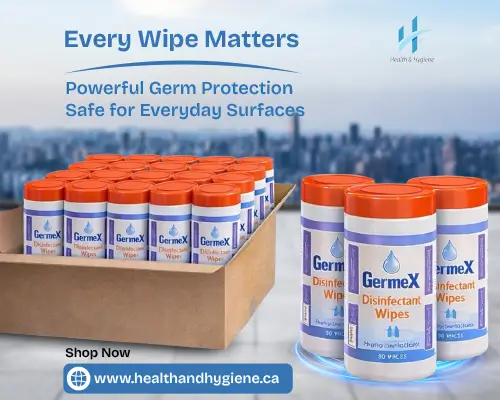
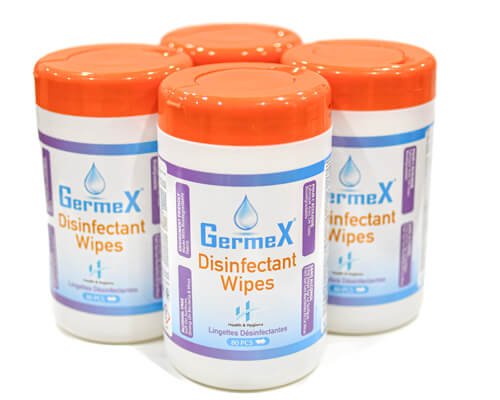
GermeX disinfecting wipes meet the requirements Canadian dental clinics need for environmental surface disinfection: Health Canada DIN registration, an alcohol-free formula that is gentle on vinyl upholstery and equipment surfaces, no rinsing required, and available in a bulk pack format with SDS documentation provided for the clinic’s infection control file.
The alcohol-free formulation specifically addresses two of the operational concerns dental practices most frequently raise about conventional wipes: the vinyl degradation that accelerates with high-frequency alcohol exposure on treatment chairs, and the operatory air quality issue that affects patient comfort during appointments that follow a cleaning cycle using strong alcohol-based products.
GermeX is not positioned as a high-level disinfectant for semi-critical instruments that is a separate clinical function requiring a different product category and protocol chain. GermeX is positioned as the registered surface disinfectant for the environmental cleaning that constitutes the majority of between-patient operatory work: the treatment chair, bracket table, counter surfaces, light handles, and the high-touch areas that define the non-critical surface category in the Spaulding classification.
For dental practices looking to set up a bulk account, request SDS documentation, or discuss volume pricing for multi-operatory clinics, our B2B and bulk ordering page covers the full inquiry process. For practices that want to review the product before committing to a bulk order, the GermeX pack of 6 480 wipes is the standard starting format for clinic evaluation.
Frequently Asked Questions
Does our clinic need a DIN-registered product for operatory surface disinfection?
Yes. All Canadian provincial dental IPAC frameworks reference Health Canada DIN registration as the standard for surface disinfectants used in clinical settings. The DIN confirms the product has been tested and registered to Health Canada’s Food and Drugs Act standard. Using an unregistered product creates a documented compliance gap.
Is the double-wipe protocol required in all Canadian provinces?
The double-wipe (clean then disinfect) sequence is referenced in multiple provincial dental Standards of Practice and is consistent with PHAC and CSA guidance. While the specific language varies by province, the two-step sequence clean with one wipe, allow to dry, disinfect with a second wipe is the recommended standard across Canadian dental IPAC frameworks.
Can GermeX be used on dental chair vinyl upholstery?
GermeX is formulated for hard, non-porous surfaces and is alcohol-free, which makes it gentler on vinyl upholstery than high-alcohol formulas with repeated daily use. For specific material compatibility questions related to your chair brand or upholstery material, we recommend reviewing the product SDS or contacting our team through the bulk inquiry page.
How do we get SDS documentation for our IPAC file?
SDS documentation for GermeX is provided with bulk orders and is available on request for practices that want it ahead of a first order. Submit a request through our B2B and bulk ordering page and our team will provide the documentation within one business day.
What volume of wipes does a three-operatory dental practice typically use per month?
A three-operatory practice seeing approximately 30 patients per day, using the double-wipe protocol at each turnover plus end-of-day cleaning, typically uses between 150 and 200 wipes per day across all operatories. That is approximately 3,000 to 4,000 wipes per month roughly six to ten canisters of the GermeX 480-count pack. Bulk pricing is available for practices ordering at this volume through our B2B page.
Environmental surface disinfection in a Canadian dental clinic requires a Health Canada DIN-registered product, used in a double-wipe sequence, at the correct contact time, with documentation supporting the clinic’s IPAC compliance record. These are not optional elements they are the standard that provincial dental regulatory bodies audit against and that protects both patients and the practice.
For dental practices looking for an alcohol-free, DIN-registered surface disinfectant that is gentle on vinyl and equipment surfaces, meets the double-wipe protocol requirements, and is available in a bulk format with SDS documentation included, GermeX addresses each of those requirements directly.
Set up a bulk account, request SDS documentation, or discuss volume pricing through our B2B and bulk ordering page, or review the product details for the GermeX pack of 6 480 wipes before placing a bulk order.