
Best Disinfectant Wipes for Travel Planes, Hotels & Airports

Knowing you need disinfecting wipes for travel is the easy part. Choosing the right wipe for the right surface in the right environment is where most travel hygiene guides stop short. The wipe that works on your kitchen counter is not necessarily the best choice for an airplane armrest, a hotel touchscreen thermostat, or a rental car’s infotainment display. And the wipe you keep in your checked luggage does very different work from the one you actually need in your jacket pocket at the security checkpoint.
This guide is organised by travel scenario rather than by brand, because that is how travel hygiene decisions actually get made: you board a plane, you enter a hotel room, you pick up a rental car, and you need to know what to reach for and where to use it. The Canadian rules on bringing wipes through airport security are settled (and covered briefly below), so most of the guide goes where the real decisions are: which surfaces, which formula, which format, and what to avoid.
Canadian Airport Security: The Short Version
CATSA the Canadian Air Transport Security Authority does not classify pre-moistened wipes as liquids. They pass through security in your carry-on without going into your liquids bag, without size or quantity restrictions, and without any special declaration. This applies to both individual wipe packets and full canisters. The same applies to TSA checkpoints at US airports for Canadians departing from or connecting through the United States. Keep wipes in their original sealed packaging for the fastest screening experience; loose or repackaged wipes occasionally prompt additional inspection at busy checkpoints.
What Makes a Travel Disinfecting Wipe Different From a Household One
The gap between a household disinfecting wipe and a travel wipe is primarily about format and formula rather than disinfecting performance. A registered disinfecting wipe in a soft travel pack and the same formula in a canister under your kitchen sink are doing the same microbial job the difference is how the travel environment changes what matters.
Format matters in travel because you are carrying it, not storing it. A canister that is practical under a bathroom sink is wasteful in a carry-on where every centimetre counts. A soft pack compresses, fits in a jacket pocket, and stays moist with a resealable flap the functional difference is meaningful across a ten-hour travel day.
Formula matters in travel because the surface variety is dramatically higher than at home. In a single day of travel a Canadian traveller may touch aircraft-grade plastic tray tables, hotel room leather headboards, rental car touchscreen displays, and airport security polypropylene trays surfaces that require different levels of care. An alcohol-free, fragrance-free formula is the most versatile across this range: no coating damage risk on displays, no fumes in a pressurised cabin, no fragrance complaints from adjacent passengers, and gentler on hands used repeatedly across a full travel day.
The Leather and Upholstery Problem Most Guides Miss
This is the detail that separates useful travel hygiene advice from generic wipe recommendations: disinfecting wipes should not be used on leather airplane seat surfaces. Alaska Airlines explicitly advises passengers against using disinfectant wipes on leather seats because the active ingredients and solvents break down the leather material over time. Other major carriers have similar guidance in their onboard cleaning policies.
The practical implication: the leather headrest, the leather armrest bolster on some business class seats, and the leather seat back on premium economy configurations are surfaces to avoid with a conventional disinfecting wipe. The plastic tray table, the plastic armrest cap, the overhead bin latch, the seatbelt metal buckle, the window blind pull cord, and the in-seat screen bezel all appropriate. When in doubt: plastic and metal yes, leather and fabric no.
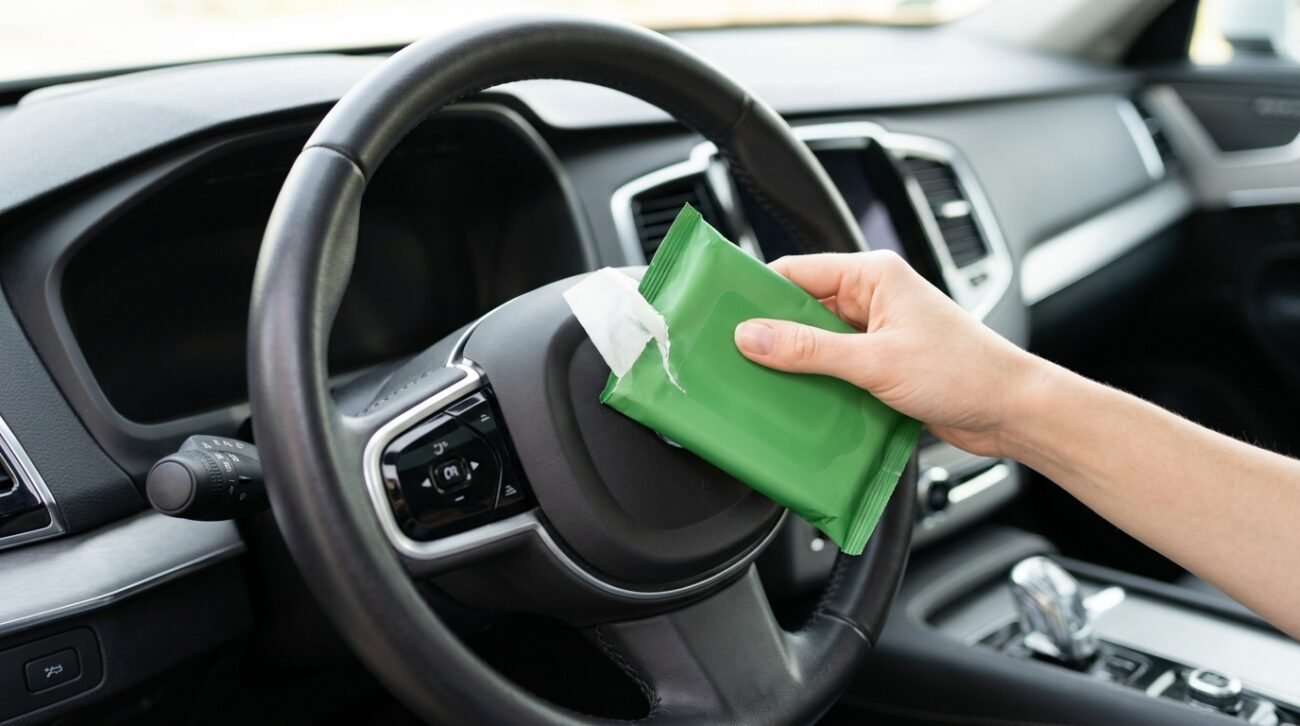
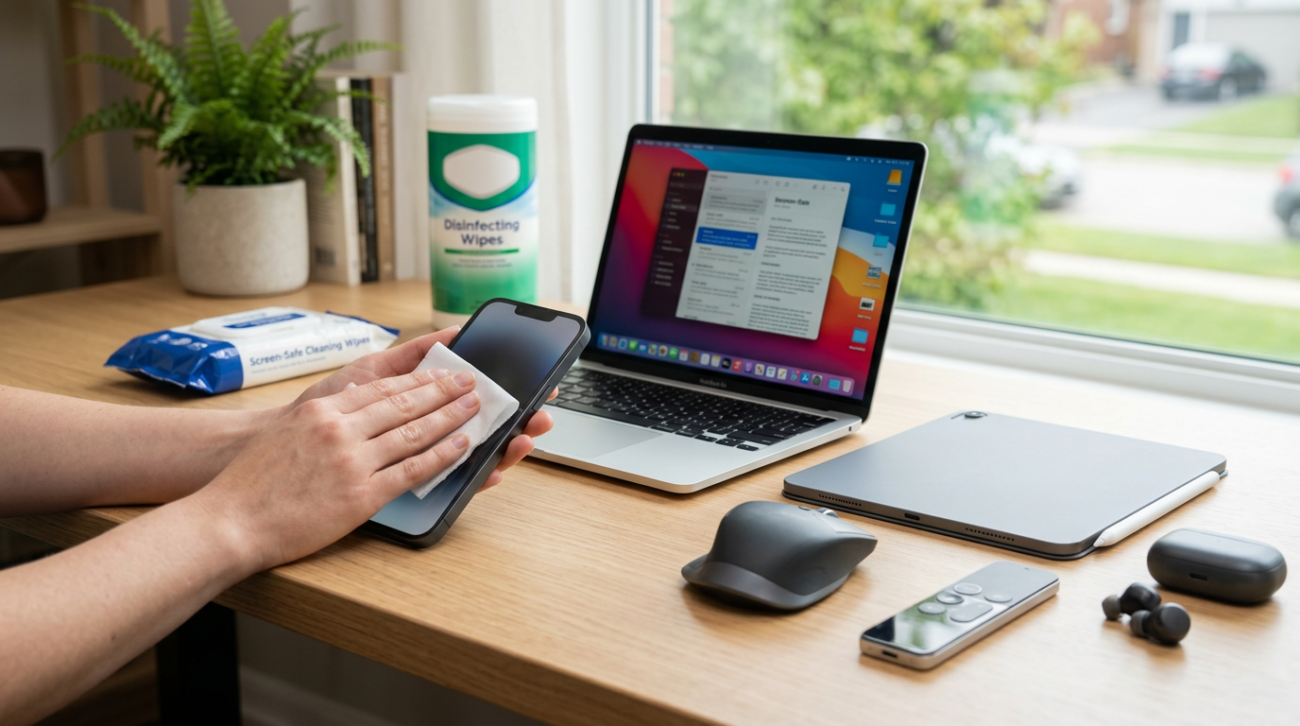
The same logic applies in hotel rooms with leather furniture and rental cars. Most rental car infotainment touchscreens have oleophobic and anti-glare coatings that standard disinfecting wipes particularly high-alcohol formulas can damage with repeated use. An alcohol-free wipe or a screen-safe wipe on the display, and a conventional registered disinfecting wipe on the steering wheel, door handles, and gear shift, is the correct product split for a rental car wipe-down.
The Contact Time Challenge in Busy Childcare Settings
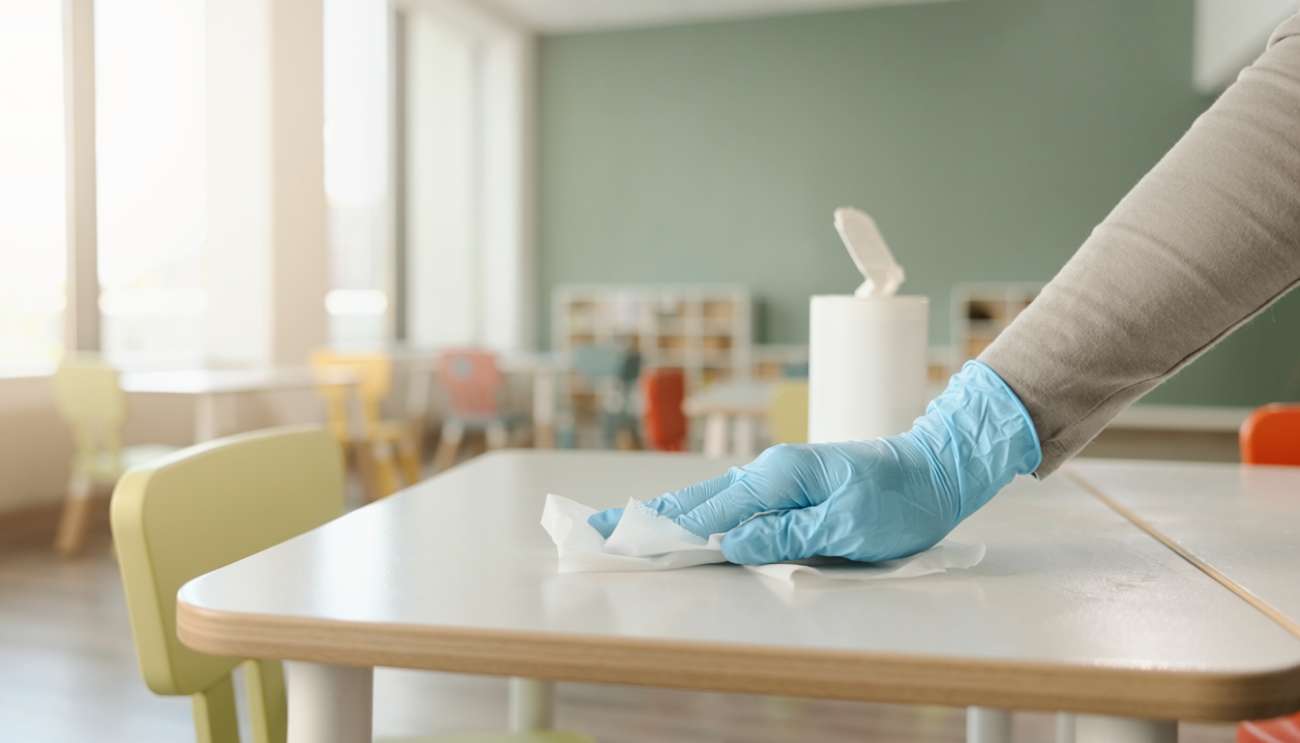
Contact time keeping a surface visibly wet for the duration stated on the product label is the variable that most frequently goes unmet in practical childcare cleaning, not because staff are negligent but because the operational pace of a childcare centre is genuinely fast. A staff member wiping down a change table between diaper changes has seconds, not minutes, to complete the task before the next child needs attention.
The Niagara Region Child Care Manual addresses this directly: in some cases, you may need to wipe or spray surfaces multiple times to achieve the contact time, as surfaces may dry quickly when disinfecting wipes are used on larger areas. Multiple wipes may be necessary to reach the required contact time. This is practical guidance that should be built into staff cleaning protocols, not left to individual staff judgement under time pressure.
Three practical measures help achieve contact time compliance in a childcare environment. First, choose an alcohol-free formula alcohol-free wipes evaporate significantly more slowly than alcohol-based products, naturally extending the wet-surface window without any additional effort from staff. Second, for large surfaces like change tables and snack tables, use two wipes applied sequentially to ensure the full surface stays wet. Third, build the contact time into the room turnover protocol explicitly: wipe the surface, move to the next task, and return to the wiped surface after the contact time has elapsed rather than wiping and immediately allowing children to re-contact the surface.
Scenario-by-Scenario: What to Use and Where
The table below maps each travel environment to its priority surfaces, the wipe type that fits, and the key caution for each setting:
Travel scenario | Priority surfaces | Wipe type needed | Key caution |
|---|---|---|---|
Airplane cabin | Tray table, armrests, overhead bin latch, seatbelt buckle, window blind pull | Registered disinfectant wipe (alcohol-free preferred) | AVOID leather seat surfaces disinfecting wipes break down leather. Hard plastic and metal only. |
Airport security | Security tray (hands after touching), gate seating armrests, lounge surfaces | Registered disinfectant wipe | Security trays are among the highest bacteria-load surfaces in any airport. Wipe hands or use a wipe on tray before placing items. |
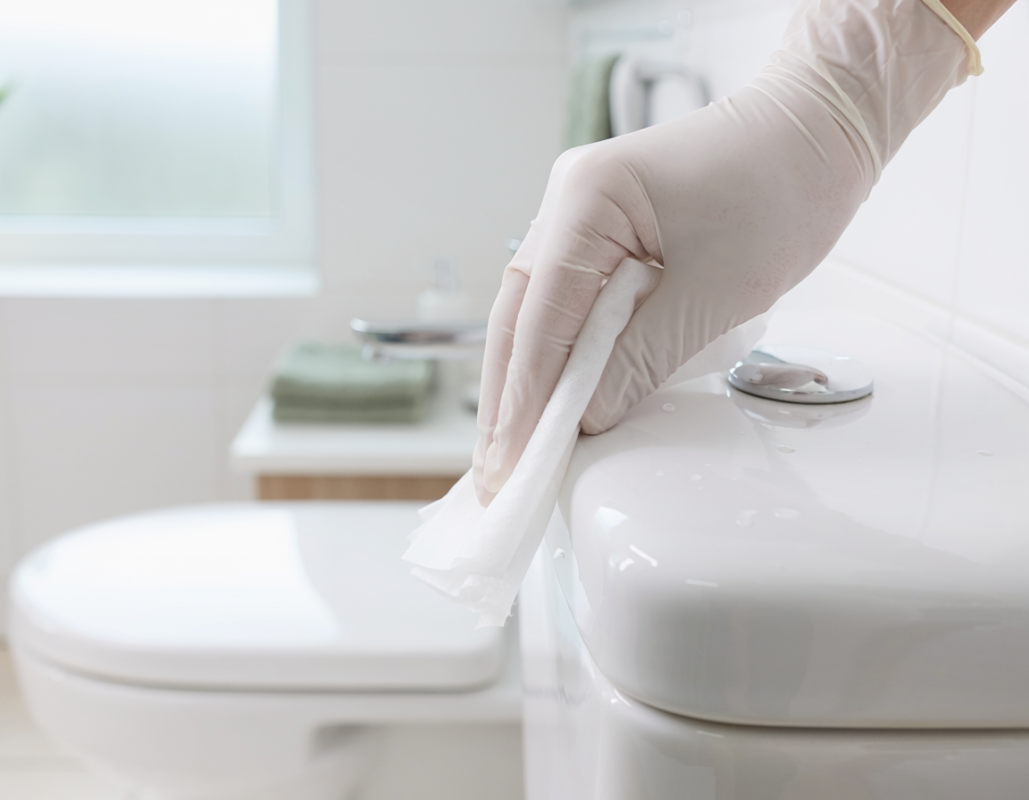
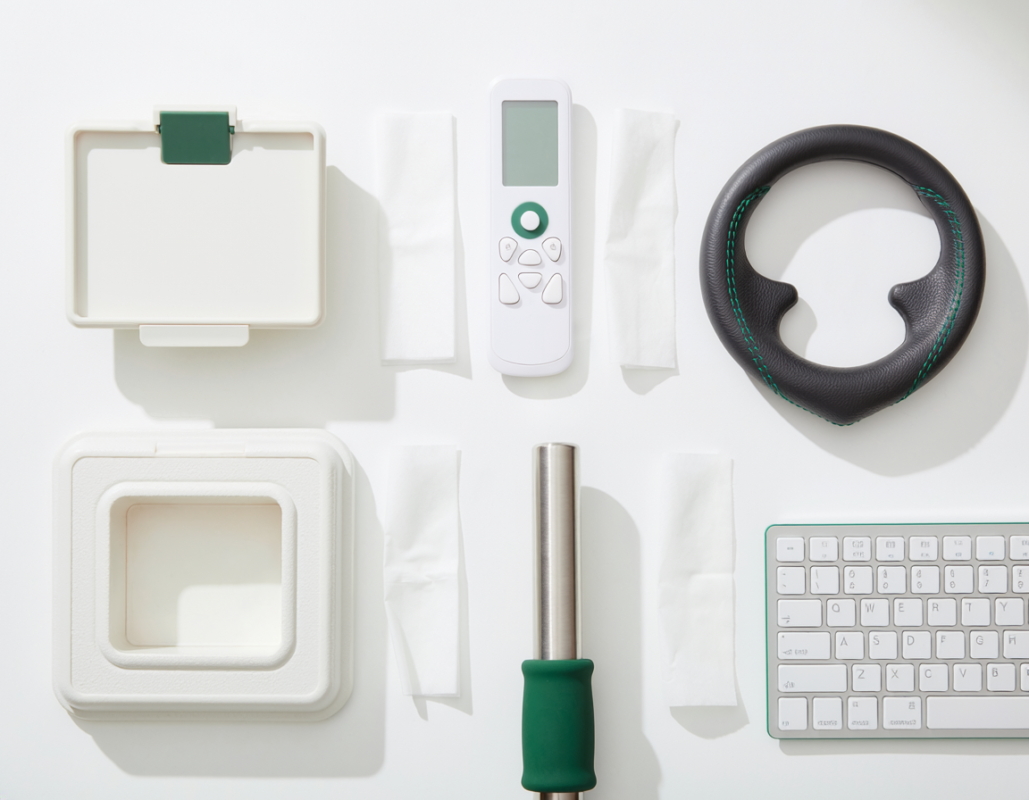
Hotel room | TV remote, light switches, door handles, bathroom tap handles, toilet flush handle | Registered disinfectant wipe | Hotel TV remotes are consistently the least-cleaned surface in any room. Wipe immediately on arrival. |
Rental car | Steering wheel, gear shift, door handles, touchscreen infotainment | Registered disinfectant wipe (alcohol-free for touchscreen) | Alcohol-based wipes damage anti-glare touchscreen coatings over time. Use screen-safe or alcohol-free on the display. |
Public transit (bus/train) | Pole grips, seat armrests, ticket terminals | Registered disinfectant wipe or hand wipe post-contact | Wipe hands after exiting rather than wiping the surface more practical on moving transit. |
Airport lounge / co-work space | Shared keyboard, desk surface, phone charging port area | Registered disinfectant wipe (screen-safe for displays) | Shared workspaces in lounges are rarely disinfected between users. |
All surfaces above are hard, non-porous the correct category for disinfecting wipes. Fabric seats, curtains, and soft furnishings in any travel environment are not appropriate surfaces for disinfecting wipes.
The Airplane Cabin Specifically: Where to Focus Your Wipes
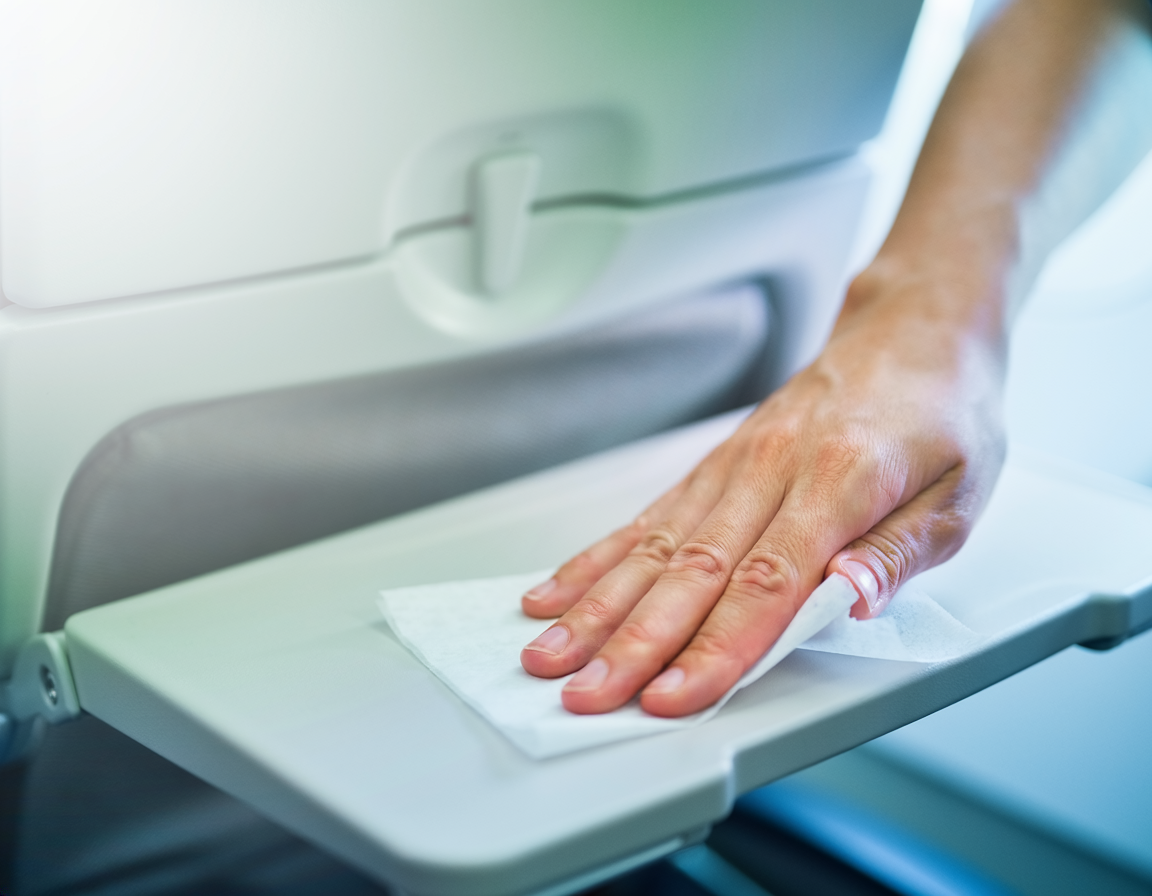
Research on airplane surface contamination consistently identifies three surfaces as the highest priority for any passenger who chooses to wipe down their seating area before use: the tray table, the seatbelt buckle, and the armrest. These three surfaces have the most hand contact from the previous passenger, receive no cleaning between short-haul domestic flights, and are specifically not included in the basic cabin cleaning that does occur on longer turnarounds.
The tray table is the most-documented surface bacterial counts on average tray tables in multiple published studies exceed those found on airport toilet seats, reflecting the fact that passengers eat, place personal items, and use laptops on a surface that is never sprayed or wiped between uses on busy routes. One wipe on the tray table, one on the seatbelt buckle (specifically the metal latch and the fabric belt near it), and one on the hard plastic armrest cap covers the surfaces that matter most in approximately ninety seconds before boarding is complete.
Two surfaces to skip entirely or handle with care: the in-seat entertainment screen and the fabric or leather portions of the seat back and headrest. The entertainment screen has a touchscreen oleophobic coating that alcohol damages over repeated use a screen-safe wipe is appropriate here, or simply avoid it if the screen is not a priority. Fabric and leather seat components should not be wiped with a conventional disinfecting wipe for the surface damage reasons described above.
Hotel Room Priority: Where Housekeeping Consistently Falls Short
Hotel room cleanliness is a top concern for Canadian travellers according to multiple traveller surveys, and the gap between a visually clean hotel room and a hygienically clean one is most evident in the surfaces housekeeping touches least. Fresh sheets and a clean bathroom are table stakes. The TV remote, the light switches, the door handles, and the telephone handset are the surfaces that receive the least consistent cleaning between guests confirmed repeatedly by hotel hygiene audits conducted by independent researchers.
On arrival, before unpacking, a two-minute wipe-down of these five surfaces covers the highest-contamination zone in any hotel room: TV remote, all light switches (including the main entry panel that controls everything), bathroom tap handles, bathroom door handle, and the room door handle on both sides. That is five to six wipes and covers the surfaces that matter most, in the time it takes to hang up a jacket.
The hotel room phone handset, if present, is the other often-missed surface touched by every previous guest, never included in standard housekeeping protocols, and directly adjacent to the mouth during use. A single wipe on the handset and the dial pad takes ten seconds and is worth the effort if you plan to use the room phone at any point.
Format Guide: Which Pack Type for Which Trip
The right format is a function of trip length, luggage configuration, and how many surfaces you plan to wipe. Here is the practical breakdown:
Format | Best for | Carry-on friendly? | Trade-off |
|---|---|---|---|
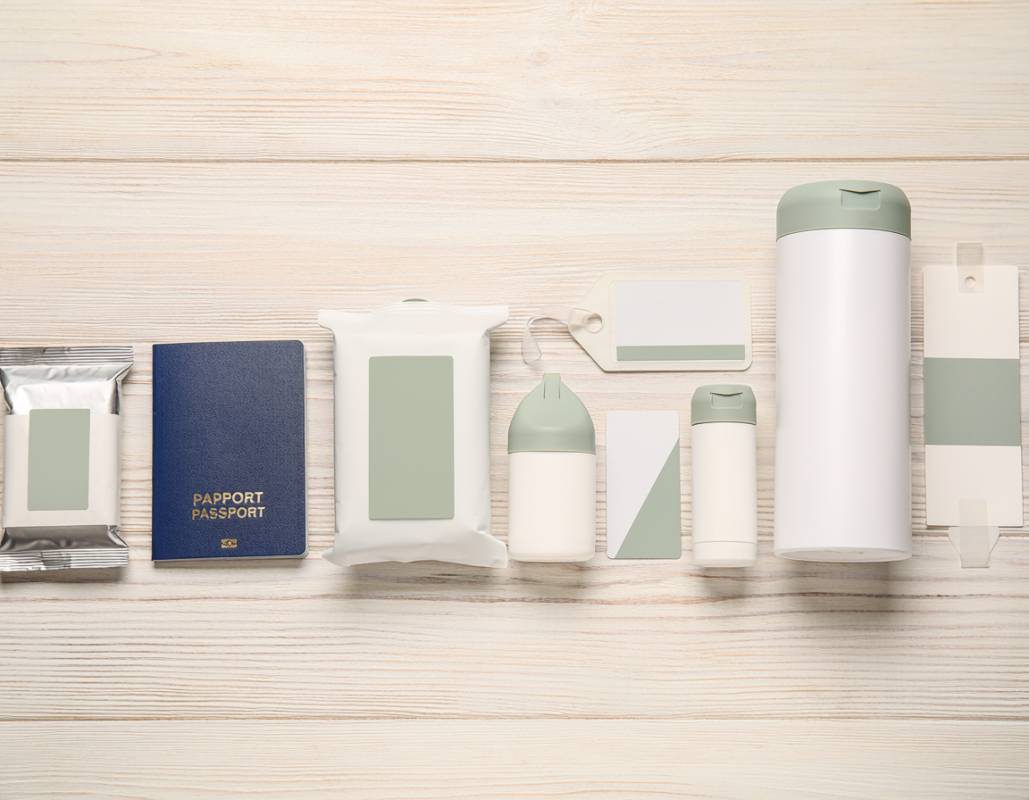
Individual foil-sealed wipes | Day trips, wallet carry, one-off use on the go | ✓ Best flat, pocketable | Only 1 use per packet need multiples for a full hotel room wipe-down |
Soft travel pack (15-30 wipes) | Weekend trips, carry-on travel, family use | ✓ Excellent compressible, resealable | Slightly larger than foil singles but far more versatile across multi-day travel |
Mini canister (30-50 wipes) | Extended trips, hotel base camp, families | ✓ Yes fits in carry-on no restriction | Cylindrical shape less space-efficient than soft pack; lid can pop under altitude pressure if not sealed |
Full-size canister (75-80 wipes) | Checked luggage, road trips, destination stays | ⚠ Carry-on allowed but bulky | Best per-wipe value; impractical for carry-on-only travel; ideal for destination supply |
The practical recommendation for most Canadian travellers: soft travel pack in the carry-on for the flight, airport, and hotel arrival wipe-down; full-size canister in checked luggage for extended trip supply.
Canadian Availability: What You Can Actually Buy Before You Fly
Most of the travel disinfecting wipe guides published online are US-centric and recommend brands available through Amazon US or US pharmacy chains that either do not ship to Canada or arrive after your departure date. The Canadian travel wipe market is thinner than the US market at retail, but several practical options are available before boarding at Canadian airports:
- Airport retail (YYZ, YVR, YUL, YYC) Most major Canadian airports carry Purell wipes and Lysol To-Go packs at convenience retailers in the departures zone. These are available post-security and priced at travel-retail premium acceptable as a backup but worth sourcing beforehand.
- Shoppers Drug Mart / Pharmaprix Clorox To-Go packs and Lysol travel-format wipes are the most consistently stocked travel disinfecting wipe options at Canadian pharmacy chains. Both are registered disinfectants, both contain alcohol, and both carry the Clorox/Lysol fragrance profile that some travellers find strong in enclosed spaces.
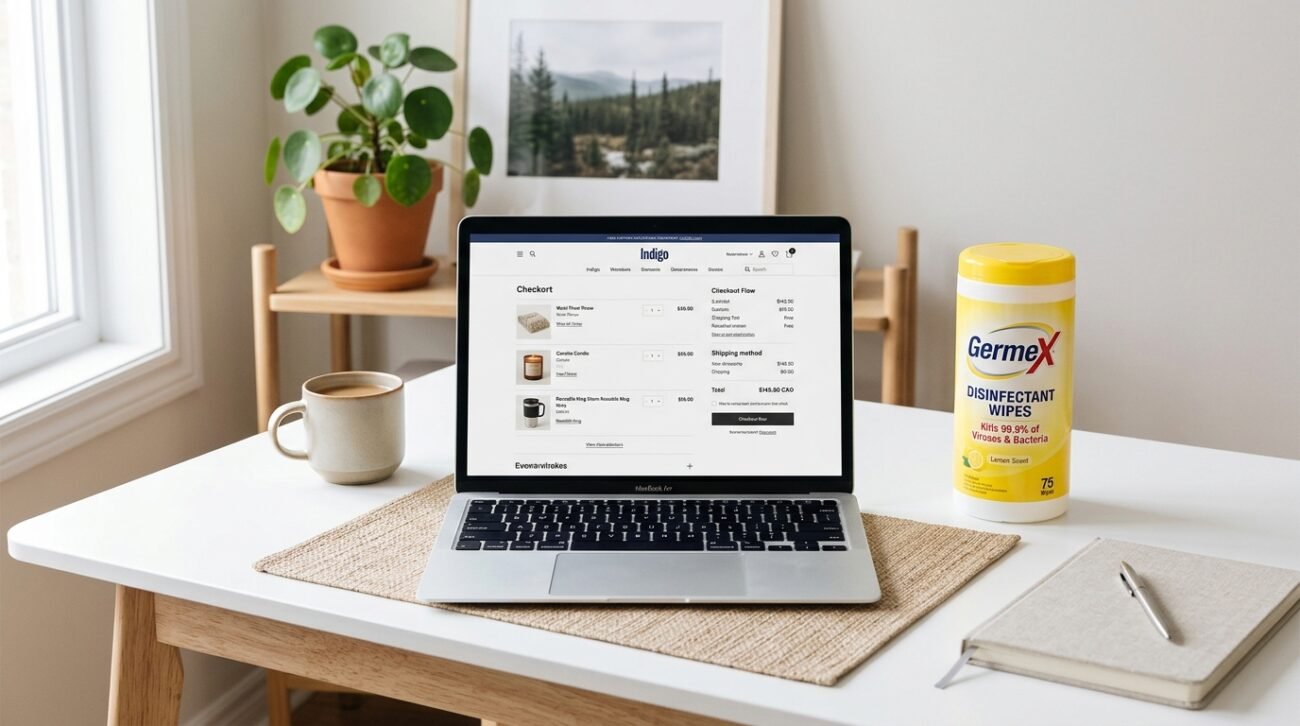
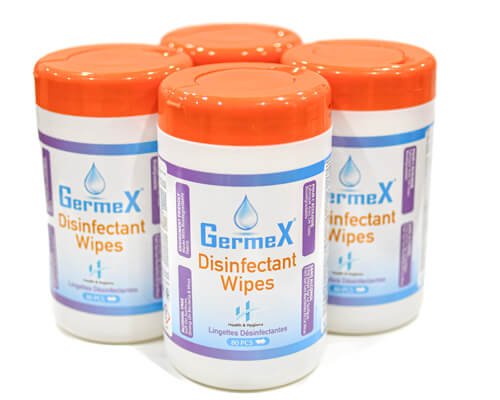
- Online pre-trip order (Health & Hygiene) GermeX travel-ready wipes alcohol-free, fragrance-free, Health Canada DIN registered, and available in travel-format packs ship across Canada with delivery timelines that work for pre-trip preparation rather than last-minute airport purchases.
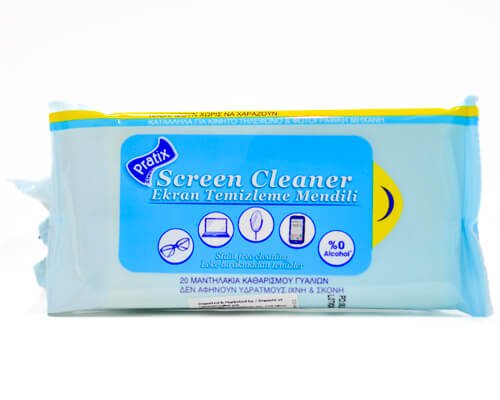
Browse the full travel-ready wipe range at healthandhygiene.ca/product-category/travel-ready/. For screen-safe wipes for phones, laptop screens, and in-flight entertainment displays, the screen and optical collection covers that use case specifically.
Building a Travel Wipe Kit That Actually Gets Used
The most effective travel hygiene routine is the one compact enough to be kept on your person rather than buried in your bag. A jacket pocket or hip-belt pouch that holds five to ten wipes covers the entire flight-plus-hotel-arrival use case for a typical domestic or short-haul international trip. When the wipes are within reach without searching through a bag, they actually get used. When they require unpacking at a bag shelf, they frequently don’t.
- For the flight: 3-4 wipes Tray table (1), seatbelt buckle and armrest (1), hands after boarding through the gate and touching overhead bin (1-2). This is the core use case and covers the surfaces that matter most without disrupting the people seated around you.
- For the hotel arrival: 5-6 wipes TV remote (1), light switches and main entry panel (1), bathroom tap handles (1), bathroom and room door handles (1), phone handset if applicable (1). Done in under two minutes before unpacking.
- For the rental car: 2-3 wipes Steering wheel (1), door handles and gear shift (1), touchscreen with alcohol-free or screen-safe wipe (1). Two minutes in the parking lot before driving off.
Frequently Asked Questions
Are disinfecting wipes allowed on Canadian flights?
Yes, without restriction. CATSA does not classify pre-moistened wipes as liquids. They carry in both carry-on and checked baggage with no size or quantity limit, no liquids bag required. Keep them in original sealed packaging for fastest security screening.
Can I wipe the airplane seat with a disinfecting wipe?
On hard plastic and metal surfaces: yes. On leather seat components: no airline guidance specifically cautions against disinfecting wipes on leather as the formula degrades the material. On fabric seat backs and headrests: no wipes disinfect hard non-porous surfaces, not fabric.
Which is better for travel: alcohol-based or alcohol-free wipes?
Alcohol-free wipes are the more versatile choice for the variety of surfaces encountered in travel. They are gentler on coated screens and displays, produce no vapour in the dry pressurised cabin air that bothers adjacent passengers, and are safer for repeated hand contact across a full travel day. For acute disinfection need (illness exposure), a 70% IPA wipe is appropriate for non-screen hard surfaces.
How many wipes do I need for a one-week trip?
For a solo traveller making one round trip with two hotel nights and one rental car: approximately 25-35 wipes covers flights, hotel arrivals, and rental car wipe-downs with a reasonable buffer. A soft pack of 30 is the practical carry-on format for this use case. For family travel or longer trips, a mini canister in the carry-on plus a full canister in checked luggage covers the full trip supply.
Are GermeX wipes available in travel format for Canadian travellers?
Yes. Health & Hygiene Inc. ships GermeX wipes across Canada in travel-ready formats through healthandhygiene.ca. Ordering before your trip is the most practical route airport retail availability in Canada is limited to a smaller selection of US-imported brands at premium prices.
The best disinfecting wipe for travel is not a single product it is the right wipe matched to the right surface and carried in the right format for the trip. Registered disinfecting wipe on hard plastic and metal. Screen-safe or alcohol-free wipe on displays and coated surfaces. No conventional disinfecting wipe on leather, fabric, or soft seat surfaces. Soft travel pack in the carry-on for access during the flight and hotel arrival. Full canister in checked luggage for extended trip supply.
For Canadian travellers who want an alcohol-free, fragrance-free, Health Canada registered option that avoids the coating-damage and cabin-vapour concerns of conventional alcohol-based travel wipes and that can actually be ordered and received before a departure date rather than sourced from an airport convenience store GermeX travel-ready wipes address all of those criteria.
Browse the travel-ready wipe range at Health & Hygiene’s travel collection, or explore the screen and optical wipes for in-flight entertainment screens, glasses, and devices on the go.