

Cat-Safe Disinfectant Wipes What Canadian Pet Owners Need to Know

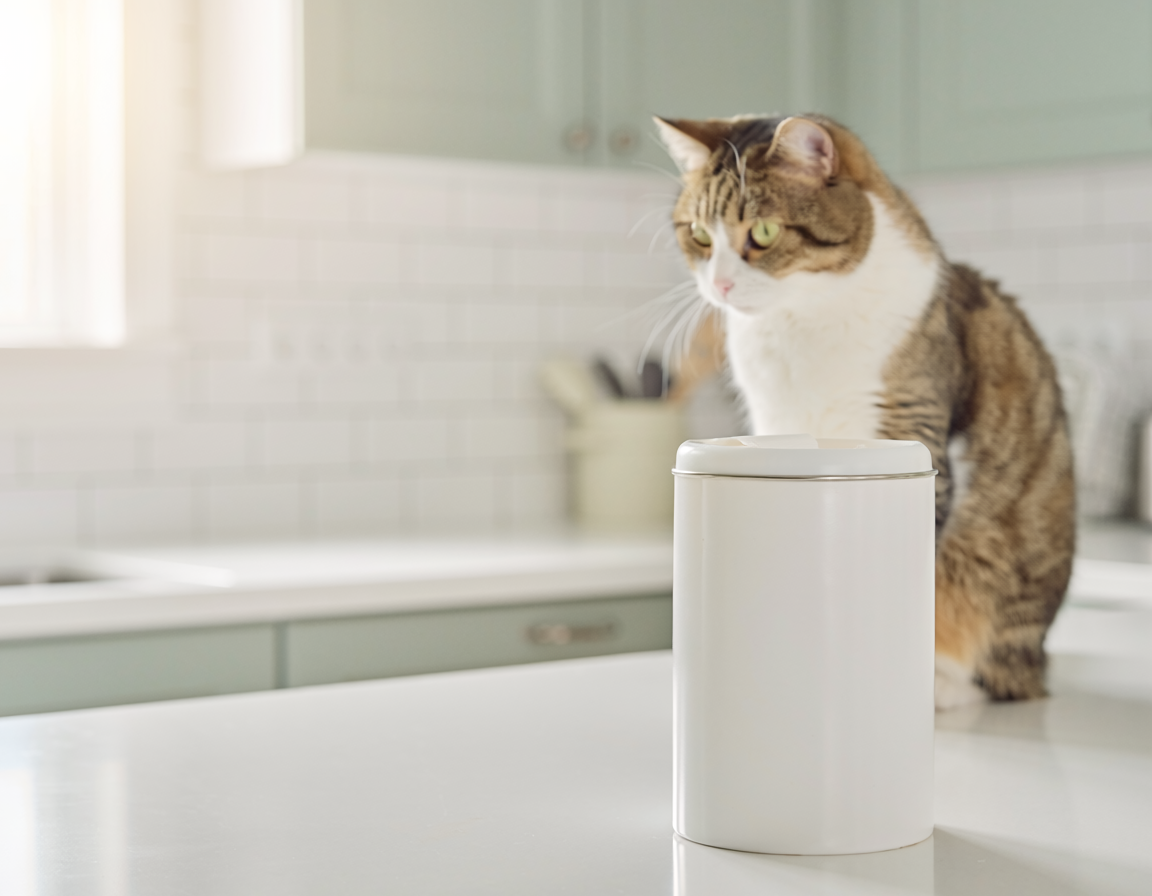
Cats are notoriously curious, low to the ground, and have an absolute commitment to grooming every surface their paws have touched. This combination makes the question of disinfectant wipe safety far more consequential in a home with cats than it is for most other pets. A dog that walks across a freshly wiped floor and then licks its paws is exposed to whatever was on that floor. A cat that does the same and then grooms for the next twenty minutes has a sustained, concentrated exposure to whatever residue the cleaning product left behind.
There is no such thing as a completely risk-free disinfecting wipe in a home with cats. But there is a meaningful spectrum from high risk to lower risk, and understanding where different products sit on that spectrum and what safe use practices look like regardless of which product you choose is the practical knowledge Canadian pet owners need. This guide covers both, along with a room-by-room reference for the specific surfaces and situations where disinfecting is worth the management effort.
Why Cats Are More Vulnerable Than Dogs or Humans
Cats have a specific metabolic limitation that makes them uniquely sensitive to a range of compounds that cause no significant problem in dogs or humans at the same exposure level. The liver enzymes responsible for processing and excreting many common chemical compounds glucuronyl transferases, in particular are largely absent or present at much lower levels in cats than in other mammals. This means that substances a dog metabolises and excretes within hours can accumulate in a cat’s system over time with repeated low-level exposure, eventually reaching toxic concentrations even when no single exposure event was large enough to cause an obvious acute reaction.
This is why cat safety is not simply about whether a product causes immediate visible irritation. A cat walking across a surface wiped with a product containing phenol, for example, may show no immediate reaction. But repeated daily paw contact followed by grooming builds up a cumulative phenol load that the cat’s liver cannot process at the same rate as exposure. Over time, this creates a toxic accumulation that manifests as illness without any single obvious exposure event to point to.
The grooming behaviour is the critical exposure route. Cats groom constantly their tongues contact their paws and coat multiple times per hour which means any residue on any surface a cat contacts is a potential ingestion event. This is the mechanism that makes surface residue the relevant risk category for cats, not just direct product contact.
The practical consequence is transepidermal water loss (TEWL) moisture evaporating through the skin surface rather than being retained in the layers where it contributes to plumpness, elasticity, and comfort. Dry skin has chronically elevated TEWL, which is why it feels tight after cleansing, flakes under makeup, and becomes uncomfortable in heated indoor environments or dry Canadian winters.
When a makeup remover wipe contacts dry skin, it introduces a formula that the skin’s compromised barrier has less capacity to resist. An ingredient like alcohol or a strong surfactant that normal skin recovers from in minutes can leave dry skin feeling stripped and uncomfortable for hours, because the barrier repair mechanism that resets normal skin after cleansing is slower and less effective in dry skin. This is why the same wipe that works for a friend with normal skin can leave dry skin feeling worse than before the makeup was removed.
Ingredients in Disinfecting Wipes That Are Toxic to Cats
The following table covers the ingredient categories most relevant for Canadian cat owners evaluating any disinfecting product:
Ingredient | Risk to cats | Appears on label as | Common products containing it |
|---|---|---|---|
Phenol / phenolic compounds | CRITICAL highly toxic to cats even in small amounts | Phenol, carbolic acid | Some Lysol products, pine-based cleaners, some disinfectant sprays |
Bleach / sodium hypochlorite | HIGH causes respiratory irritation, GI damage if ingested | Sodium hypochlorite | Clorox wipes, bleach-based disinfectants |
Ammonia | HIGH respiratory irritant; cats naturally avoid it but fumes accumulate indoors | Ammonium hydroxide | Some glass cleaners, certain Lysol products, floor cleaners |
Isopropyl / ethyl alcohol | MODERATE toxic if ingested; vapour irritates respiratory tract | Isopropanol, ethanol, SD alcohol | Most conventional disinfecting wipes and sprays |
Formaldehyde | HIGH carcinogen; toxic by inhalation and contact | Formaldehyde, formalin | Some disinfectants; less common in modern products |
Quaternary ammonium compounds (quats) | MODERATE can cause GI irritation and mucosal ulcers if ingested from licked surfaces | Benzalkonium chloride, alkyl dimethyl | Conventional disinfecting wipes including many registered brands |
Synthetic fragrance | LOW-MODERATE respiratory irritant for cats; felines highly sensitive to airborne compounds | Fragrance, parfum | Most scented household cleaning products |
The Paw-Licking Exposure Route Explained
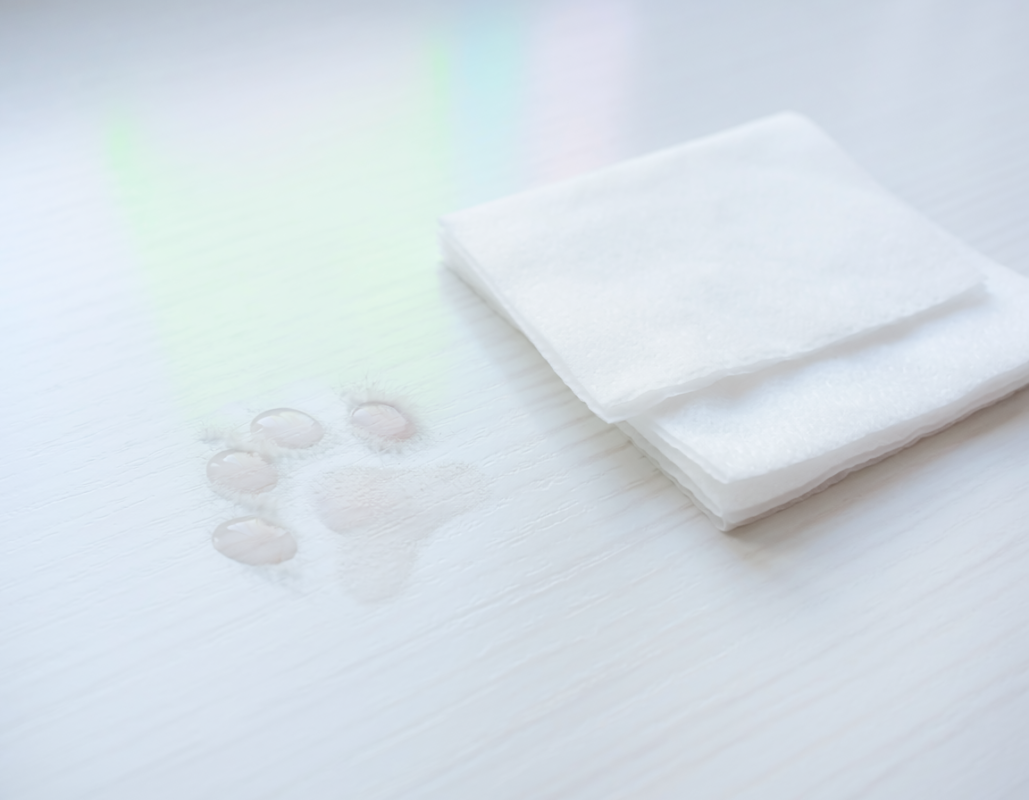
Understanding how the exposure actually happens helps explain why the safe use practices in this guide are what they are. A disinfecting wipe applied to a hard surface leaves a residue layer as the formula dries. Depending on the product, this residue contains the active ingredient at a reduced concentration (partly evaporated or absorbed into the surface), preservatives, fragrance compounds, and whatever surfactants or solvents were present in the original formula.
When a cat walks across a surface before the residue has fully dried or dissipated, the residue transfers to the paw pads. Cats groom their paws within minutes of any surface contact the residue is then ingested through licking. This is not a dramatic or visible exposure event. It is quiet, routine, and happens daily in homes where cleaning products are used regularly without cat-specific safety practices in place.
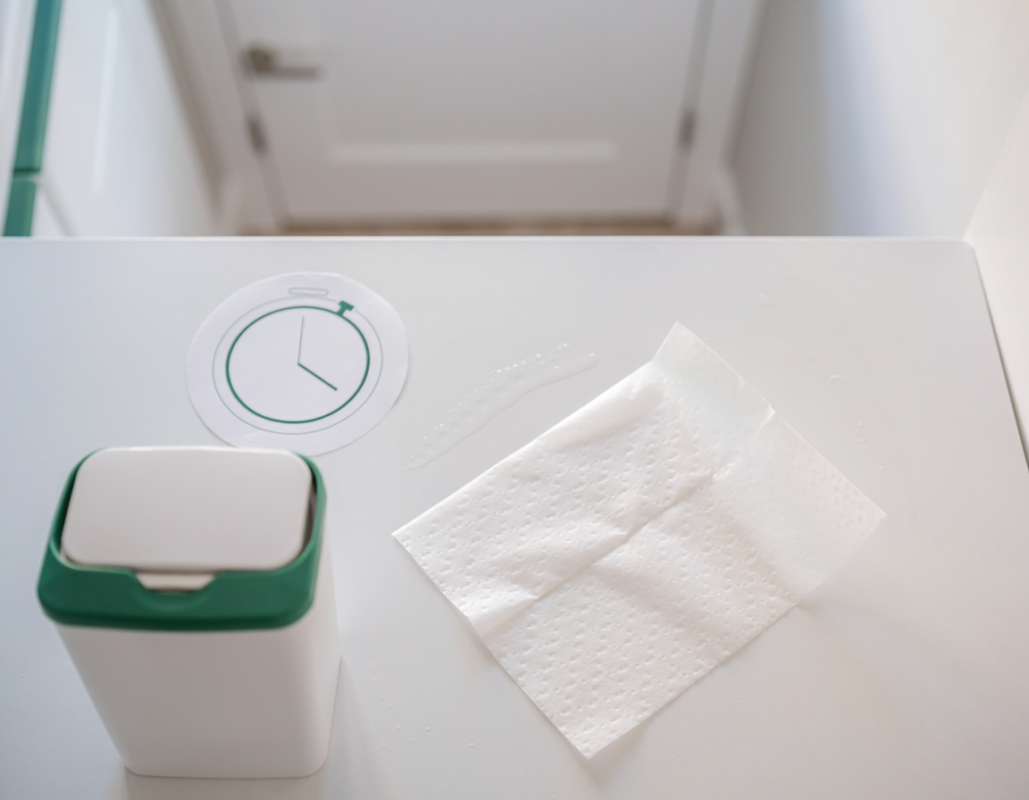
The critical variable is dry time. Most disinfecting wipe formulas reach a point of significantly reduced residue risk after the surface has air-dried completely typically two to five minutes in a ventilated room, longer in humid or poorly ventilated environments. The safe use practice that addresses this risk is simply not allowing the cat back into a cleaned area until the surface is visibly and completely dry, rather than wiping and immediately opening the door.
How to Use Any Disinfecting Wipe Safely in a Home With Cats
These practices apply regardless of which registered disinfectant you use. No formula choice removes the need for safe use practices, but safe use practices can make even a conventional disinfecting wipe significantly lower risk in a cat household:
- Keep cats out of the room during cleaning and for the full dry time This is the single most effective practice. Close the door or use a baby gate to prevent cat access until the surface is completely dry. The dry time varies by formula, surface, and ventilation a minimum of five minutes is a reasonable baseline; longer in humid conditions.
- Never use phenol-containing products anywhere in a cat household Phenol is highly toxic to cats and there is no safe use protocol that makes it appropriate for homes with cats. Check any cleaning product for phenol or carbolic acid on the ingredient list before purchase.
- Dispose of used wipes immediately in a securely closed bin A used wipe sitting in an open wastebasket is a direct ingestion risk. Cats investigate waste bins regularly and a damp, recently used wipe contains concentrated formula residue. Always dispose of used wipes in a bin with a secure lid.
- Ventilate the area during and after cleaning Cats’ respiratory tracts are sensitive to airborne chemical compounds, particularly fragrance and volatile organic compounds. Opening a window or running a fan during and after cleaning disperses airborne residue before the cat re-enters.
- Never wipe the cat’s paws, coat, or bedding with a disinfecting surface wipe Surface disinfectants are formulated for hard, non-porous surfaces not for direct skin or coat contact with any animal. For grooming wipes for cats, use products specifically formulated and labelled for pet skin use.
- Wipe food and water bowl areas with food-contact-approved formula only The area immediately around a cat’s food and water bowls is a critical zone. Only use a disinfecting wipe that is approved for food-contact surfaces without a rinse step in this area, and ensure complete drying before replacing bowls.
What Lower-Risk Looks Like for Cat Households
While no disinfecting wipe is zero-risk in a cat household, choosing a formula that avoids the most acutely toxic ingredient categories reduces the exposure risk when a cat does contact a surface before it is fully dry. The lower-risk formula profile for cat households has four characteristics:
- Phenol-free The non-negotiable starting point. Any product containing phenol or phenolic compounds is not appropriate for homes with cats.
- Bleach-free Sodium hypochlorite is a significant respiratory and GI irritant for cats. A formula without bleach as an active ingredient is meaningfully lower risk.
- Alcohol-free Isopropyl and ethyl alcohol are toxic to cats if ingested. An alcohol-free formula removes this class of risk, and also eliminates the volatile organic compound vapour that affects feline respiratory sensitivity.
- Fragrance-free Synthetic fragrance compounds are airborne irritants for cats, whose olfactory sensitivity is approximately fourteen times that of humans. A fragrance-free formula reduces the respiratory exposure that occurs even when a cat does not directly contact the cleaned surface.
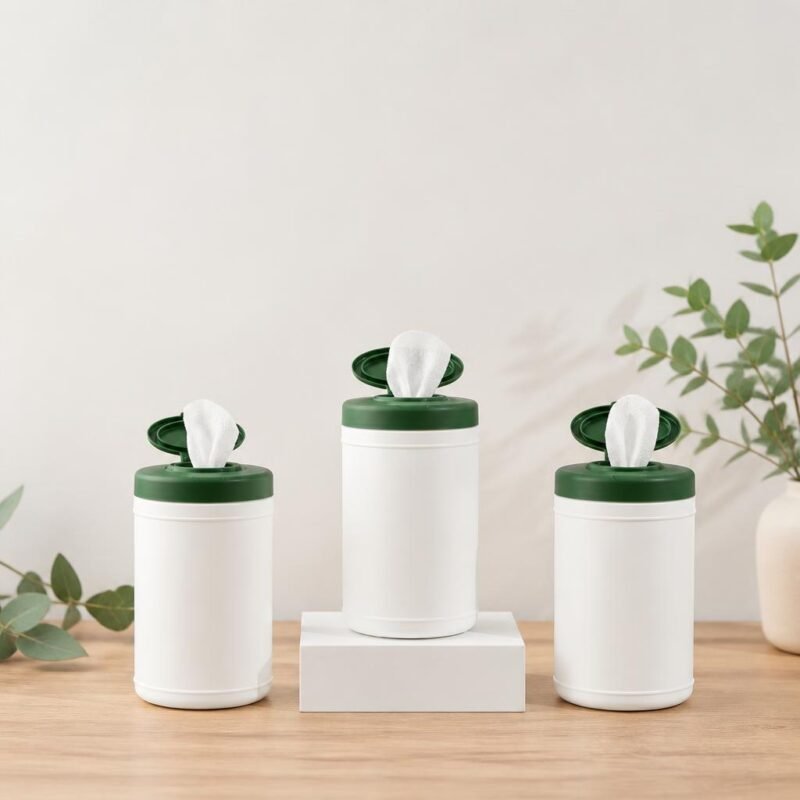
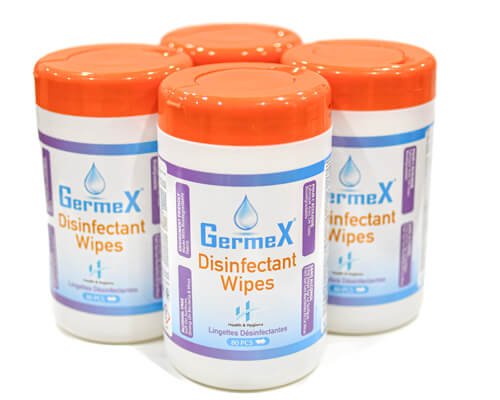
GermeX disinfecting wipes are phenol-free, bleach-free, alcohol-free, and fragrance-free. These four attributes mean it sits in the lower-risk range for cat households relative to conventional formulas that contain alcohol, bleach, or phenolic compounds. It is not a “cat-safe” product in the sense that a cat could ingest it without consequence the quat-based active ingredient (benzalkonium chloride) carries its own GI irritation risk if ingested through paw-licking from an incompletely dried surface. Safe use practices particularly the dry time rule remain essential regardless of formula choice.
Browse the full GermeX range in our disinfecting wipes collection, or go directly to the GermeX 4-canister pack phenol-free, bleach-free, alcohol-free, and fragrance-free.
Room-by-Room Reference for Canadian Cat Households
The risk level of disinfecting in any area of your home depends on how likely your cat is to contact that surface before it is fully dry, and how close the surface is to grooming and eating behaviour. Use this table as a practical reference:
Room / Area | Surfaces to disinfect | Cat risk level | Safe practice note |
|---|---|---|---|
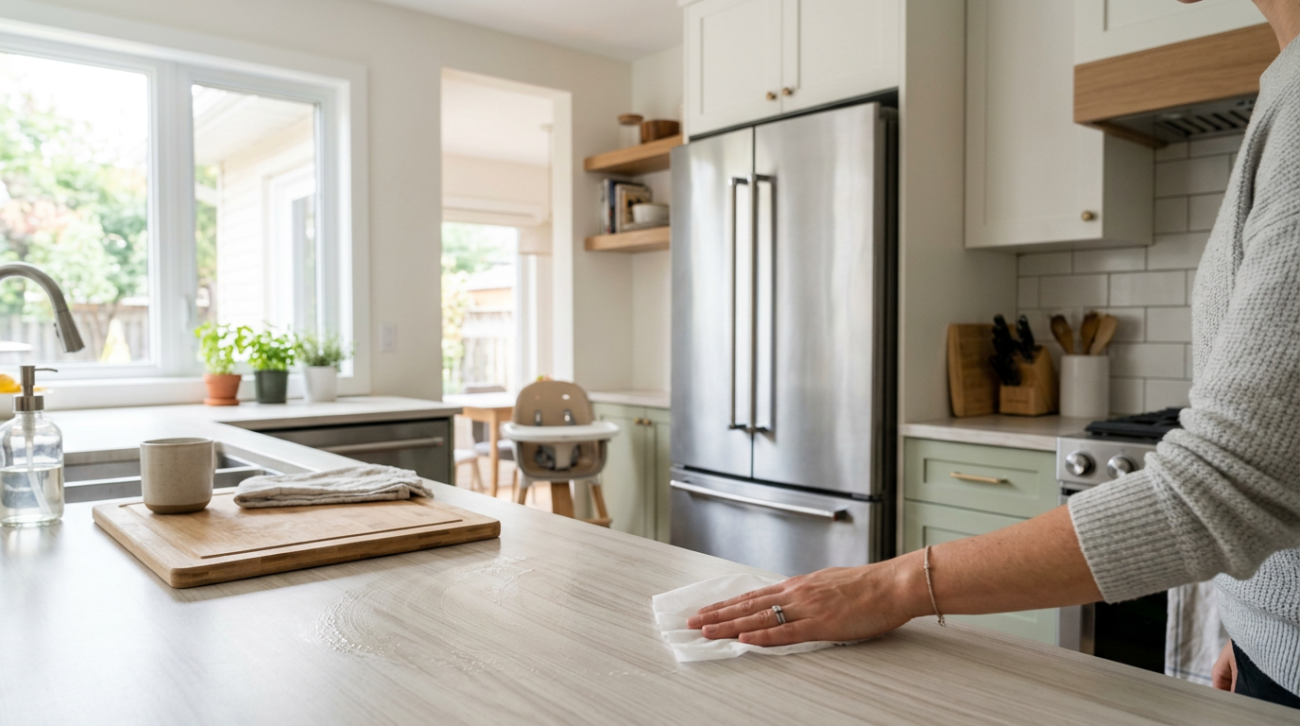
Kitchen | Counters, sink, appliance handles, tap handles | HIGH cat may jump on counter before surface fully dry | Wipe and keep cat out until completely dry. Choose no-rinse food-safe formula. |
Litter box area | Surrounding floor, shelf, storage unit surfaces | HIGH cat contacts this area constantly, grooms after | Fully dry before allowing cat back. Avoid phenol and bleach entirely in this zone. |
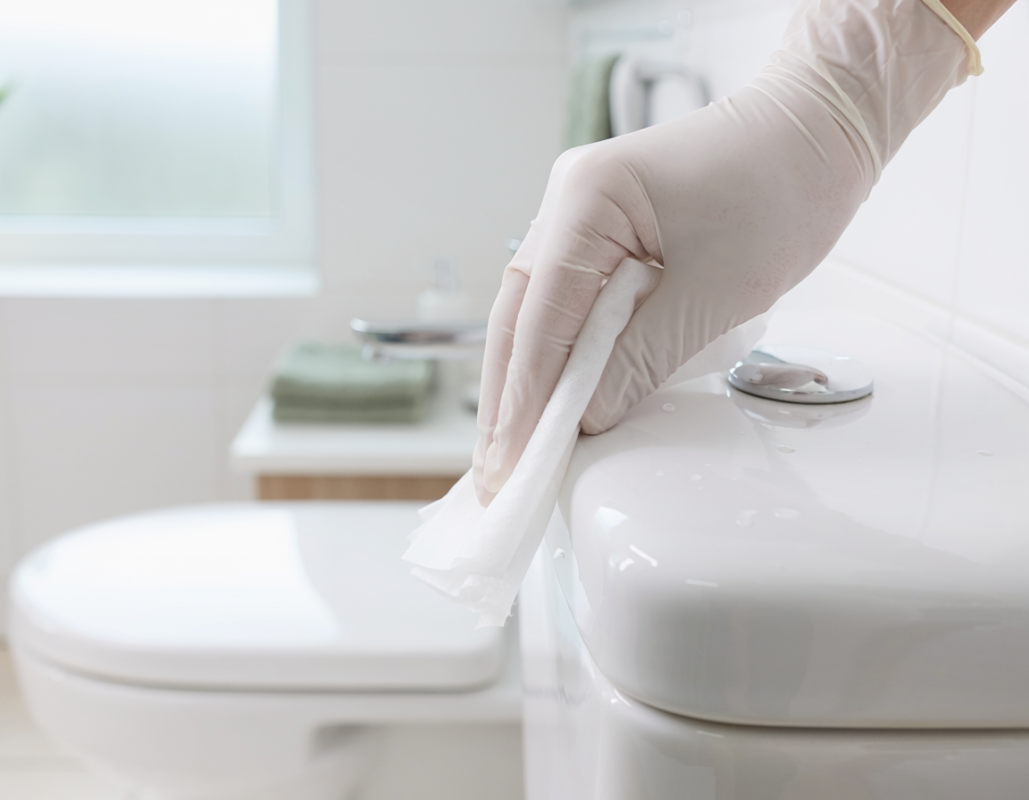
Bathroom | Toilet exterior, sink, floor tiles | MODERATE cat may drink from toilet or sink | Ensure full dry time. Keep toilet lid closed after cleaning until surface dry. |
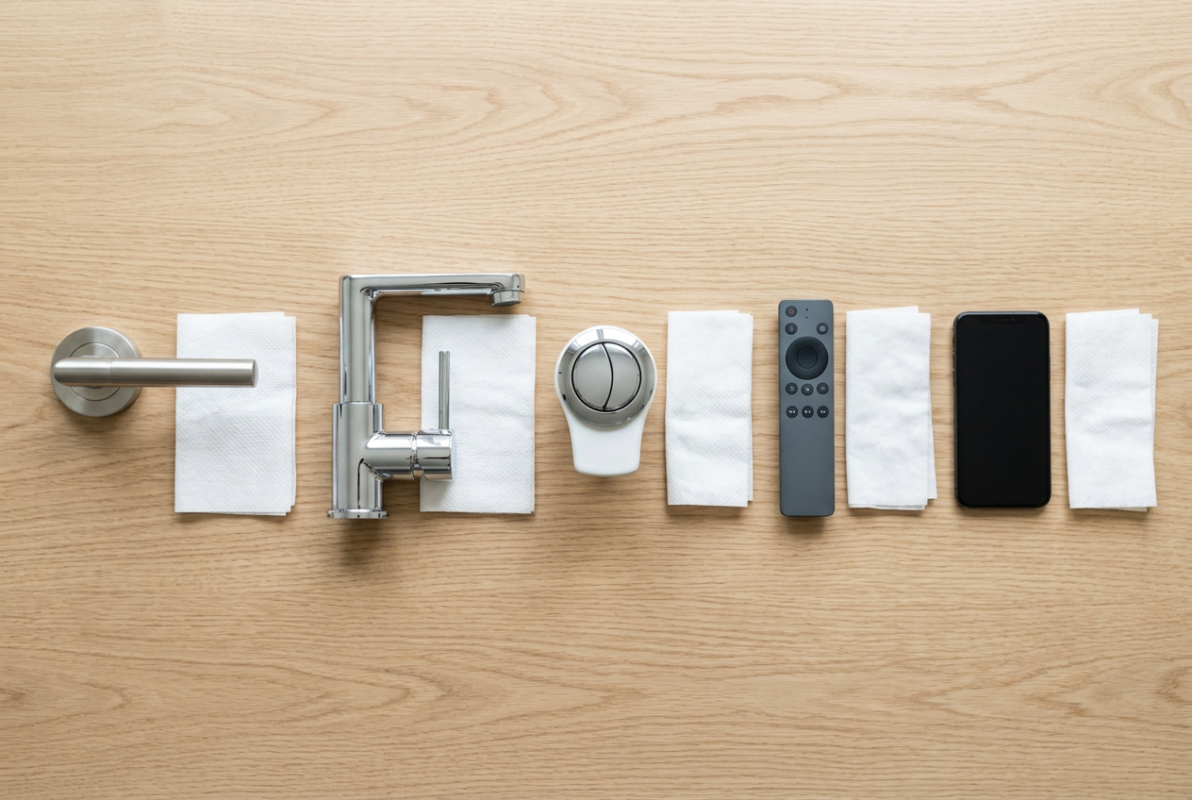
Living area | Door handles, light switches, remote controls | LOW-MODERATE indirect paw contact possible | Standard dry time sufficient. Dispose of wipe in sealed bin immediately. |
Cat furniture / bedding area | Hard surfaces near cat tree or bed | HIGH cat grooms after contacting any surface | Allow extended dry time or skip disinfecting and clean only with mild detergent. |
Food and water bowl area | Floor surface around bowls | CRITICAL direct contact with eating/drinking zone | Use food-contact-approved formula only. Full dry time mandatory before replacing bowls. |
Signs of Cleaning Product Exposure in Cats
Even with careful safe use practices, exposure can occur. Knowing what signs to watch for allows you to seek veterinary attention promptly if a cat has contacted a cleaning product. Common signs of cleaning product exposure in cats include: hypersalivation or drooling, pawing at the mouth, vomiting, lethargy, watery eyes or squinting, respiratory distress or laboured breathing, and visible redness or irritation on paws or skin.
If you observe any of these signs after using a cleaning product, contact your veterinarian or the Pet Poison Helpline (1-800-213-6680) immediately. Have the product packaging available so the active ingredients and DIN can be referenced during the call. Do not induce vomiting unless specifically instructed to by a veterinary professional.
Frequently Asked Questions
Is any disinfecting wipe completely safe for cats?
No. All registered surface disinfectants contain active antimicrobial ingredients that are, by definition, toxic to microorganisms and can cause GI irritation or worse in cats if ingested through paw licking from an incompletely dried surface. The distinction is between higher-risk formulas (phenol, bleach, alcohol) and lower-risk formulas (alcohol-free, phenol-free, bleach-free), combined with safe use practices that allow complete drying before cat re-entry.
Are Clorox or Lysol wipes safe to use with cats in the house?
Conventional Clorox and Lysol wipes contain ingredients including isopropanol or ethanol (alcohol) and quaternary ammonium compounds that are harmful to cats if ingested. Lysol products may also contain phenolic compounds in some formulations, which are highly toxic to cats. If used, these products require careful safe use practices including full dry time and keeping cats out of the area during cleaning. Phenol-containing Lysol products specifically should not be used in homes with cats.
Can I use disinfecting wipes near my cat’s litter box?
In the litter box area, the cat’s contact frequency and grooming behaviour create the highest exposure risk in the home. Use a lower-risk formula (phenol-free, bleach-free, alcohol-free) in this zone specifically, ensure complete dry time before allowing the cat back, and never use phenol or bleach-based products anywhere near the litter box area.
What should I do if my cat licked a freshly wiped surface?
Contact your veterinarian or the Pet Poison Helpline (1-800-213-6680) with the product name and active ingredients. Most single exposures from a licked surface cause mild GI irritation at most, but phenol-containing products require urgent veterinary attention even at low exposure levels.
Are there cleaning products that are genuinely safe around cats?
Diluted white vinegar and baking soda are generally considered safe for cleaning around cats, though they are not registered disinfectants and make no verified germ-kill claims. For situations where genuine disinfection is needed, a lower-risk formula (phenol-free, bleach-free, alcohol-free, fragrance-free) with proper safe use practices is the most practical compromise.
There is no disinfecting wipe that is completely risk-free for cat households, and any guide claiming otherwise is not being accurate. What exists is a meaningful difference between formulas that contain the most acutely toxic ingredient categories phenol, bleach, alcohol and those that do not, combined with safe use practices that dramatically reduce the exposure risk for any formula.
For Canadian cat owners who want to disinfect their homes without the highest-risk ingredient classes, the practical choice is a phenol-free, bleach-free, alcohol-free, fragrance-free registered disinfectant used with a dry-time discipline that keeps cats out of cleaned areas until the surface is completely dry. That combination formula choice plus safe use is what cat-safe disinfecting actually looks like in practice.
Browse the full disinfecting wipe range at Health & Hygiene’s disinfecting wipes collection, or go directly to the GermeX 4-canister pack phenol-free, bleach-free, alcohol-free, and fragrance-free for Canadian homes with cats.
In Canada, the options that meet this standard across different price points are CeraVe for ceramide-rich drugstore access, Bioderma Sensibio for reactive dry skin requiring the mildest possible formula, Simple for accessible everyday use, and Health & Hygiene’s dry and sensitive formula for a cost-effective multi-pack that addresses the hydration requirement specifically.
Browse our Makeup Remover Wipes for Dry and Sensitive Skin formulated specifically for the moisture-retention needs of dry skin, available in a six-pack for daily Canadian use. Or explore the full makeup removal collection for both skin type formulas.