
Best Disinfectant Wipes for Electronics and Phones in Canada (2026)

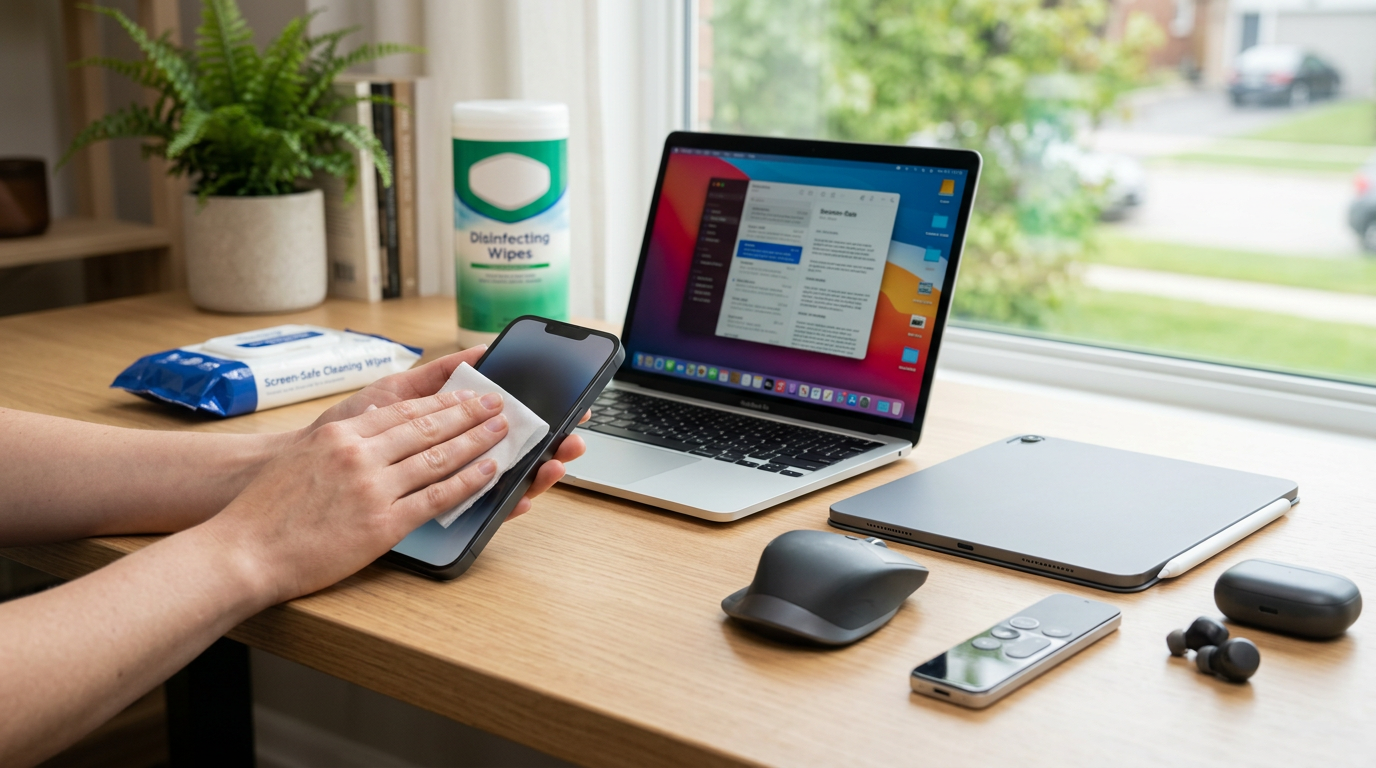
Your phone is one of the most germ-laden objects you own. Multiple studies on mobile phone surface contamination have found bacterial counts on the average smartphone screen that rival public restroom surfaces not surprising for a device that travels everywhere, sits on every surface, and is handled dozens to hundreds of times per day. The problem is that cleaning and disinfecting a phone is more complicated than wiping a kitchen counter: the oleophobic coating that keeps fingerprints manageable, the anti-glare treatment on laptop displays, and the delicate speaker mesh on earbuds all respond very differently to cleaning chemicals than a sealed laminate countertop does.
This guide separates the two distinct jobs cleaning electronics and disinfecting electronics explains which wipe formula is appropriate for each surface and situation, and gives Canadian shoppers a device-by-device reference they can actually use. The most common mistake in electronics cleaning is using the same wipe on every surface regardless of coating sensitivity. The second most common mistake is using a cleaning wipe and assuming it has disinfected anything.
Cleaning vs. Disinfecting Electronics: Two Different Jobs
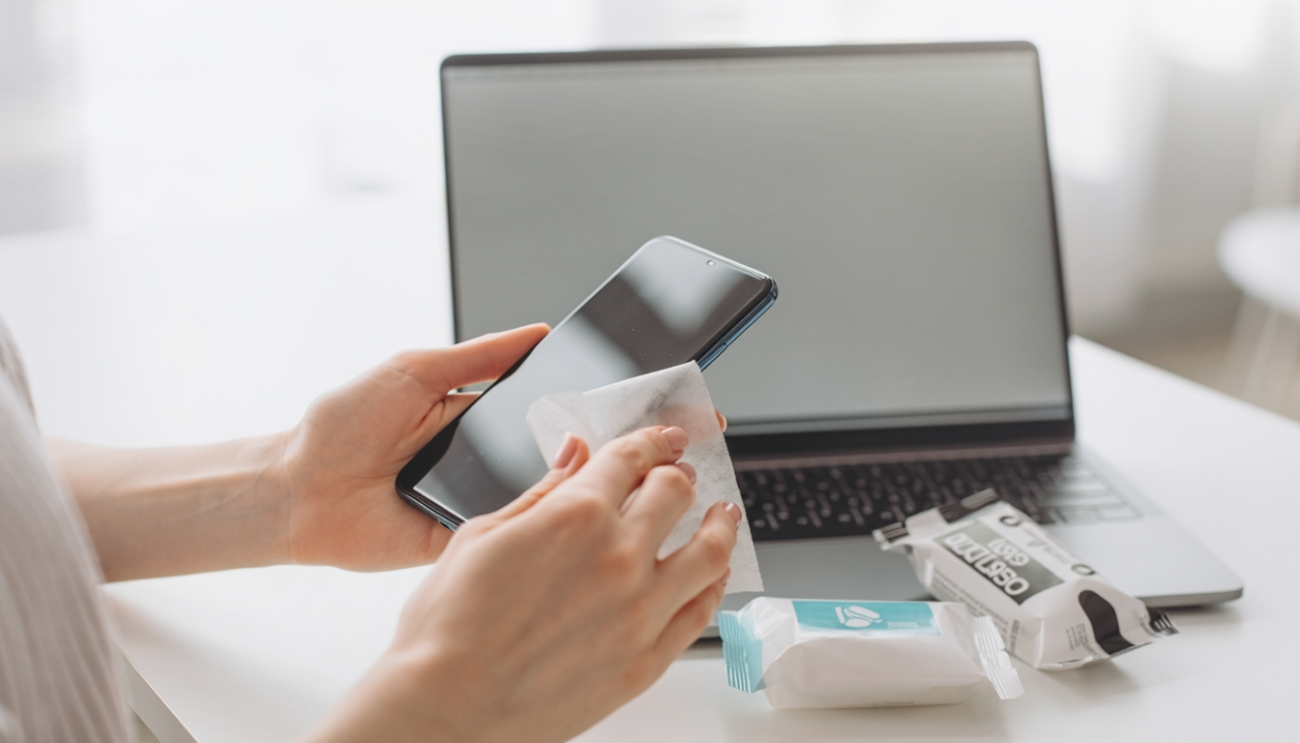
Cleaning a phone screen means removing fingerprints, dust, smudges, and surface oil. A cleaning wipe does this through mild surfactant action and gentle friction the result is a clearer, cleaner-looking screen. Windex Electronics Wipes, for example, are specifically formulated for cleaning electronics but explicitly state they do not contain disinfecting ingredients. They clean, but they do not kill pathogens.
Disinfecting a phone means killing bacteria and viruses on the surface the pathogens that transfer from hands to phone to face multiple times per day. A registered disinfecting wipe carries a kill claim backed by testing against named organisms. For everyday aesthetics, cleaning is sufficient. For genuine pathogen reduction during illness in the household, after handling a device used by multiple people, or after commuting on public transit a registered disinfectant is the appropriate tool.
The challenge is that the most effective disinfecting ingredients for hard surfaces high-concentration alcohol, quaternary ammonium compounds are also the ones most likely to interact with the delicate coatings on screens. Navigating this requires knowing which surfaces have coating risk and which do not, and applying the right product to each.
Why Phone Screens Are Worth Disinfecting Regularly
The hand-to-phone-to-face transfer pathway is one of the most consistent routes for pathogen exposure in everyday life. Hands contact contaminated surfaces, transfer organisms to the phone during use, and the phone then contacts the face during calls, gets set face-down on public surfaces, and is picked up and handled again within minutes. Unlike a keyboard or remote, a phone makes direct contact with skin and sometimes with the mouth area during calls.
Studies measuring microbial load on smartphone surfaces consistently find a diverse range of bacteria including Staphylococcus aureus and Escherichia coli, with some studies finding more bacteria per square centimetre on phone screens than on typical toilet surfaces. This is not a reason to panic most of these bacteria are not dangerous under normal immune conditions but it is a reason to build periodic phone disinfection into hygiene routines, particularly during cold and flu season or when someone in the household is ill.
The frequency question: daily cleaning with a screen-safe wipe for aesthetics, and disinfection with an appropriate product two to three times per week or after any high-contamination exposure event is a practical routine that balances hygiene with coating preservation.
Screen Coatings and Why They Matter for Wipe Choice
Modern smartphone and laptop screens are not bare glass. They carry at least two functional surface treatments that affect both performance and cleaning requirements:
- Oleophobic coating The oil-repelling layer that causes fingerprints to sit on the surface rather than bonding to the glass. When this coating degrades, screens attract fingerprints more aggressively and smudges become harder to remove. Degradation happens gradually with repeated contact with harsh solvents, particularly ammonia and high-concentration alcohol.
- Anti-glare or anti-reflective coating Applied to laptop displays and some phone screens to reduce reflections. This coating is nanometres thin and is particularly sensitive to ammonia, which attacks it aggressively, and to acetone, which dissolves it rapidly. A single contact with ammonia-containing glass cleaner can visibly damage an anti-reflective coating.
The practical implication: any wipe used on a screen surface should be explicitly ammonia-free and acetone-free, and low-alcohol or alcohol-free for regular use. These are not optional specifications for premium devices they are the minimum requirements for any screen with functional coatings, which covers virtually every smartphone and laptop sold in Canada since 2015.
The Alcohol Question: When It Is and Is Not Appropriate on Screens
The guidance on alcohol and phone screens appears contradictory across different sources, and it is worth resolving directly. Apple recommends 70% isopropyl alcohol wipes for cleaning iPhone screens. Samsung offers similar guidance for their devices. Meanwhile, screen coating specialists and display manufacturers warn that alcohol degrades oleophobic coatings with repeated use.
The resolution is about frequency and purpose. A single use of a 70% IPA wipe for disinfection during illness is very different from daily cleaning with the same product. The oleophobic coating on a phone screen can tolerate occasional IPA contact without significant degradation it is cumulative daily exposure that strips the coating progressively. Apple’s recommendation is for disinfection when warranted, not for daily aesthetic cleaning.
For daily screen cleaning, a dedicated screen-safe wipe with a mild, low-alcohol or alcohol-free formula designed for coated surfaces is the correct tool. For occasions where disinfection is genuinely needed on a screen surface, a single use of a 70% IPA wipe is acceptable per manufacturer guidance, followed by resuming the screen-safe cleaning routine. Never use alcohol-based wipes as the daily cleaning solution for any screen with an oleophobic or anti-reflective coating.
What to Look for in an Electronics-Safe Wipe
- Ammonia-free Non-negotiable for any coated display. Ammonia attacks anti-reflective coatings faster than any other common cleaning compound. Look for this on the packaging before buying any wipe intended for screen use.
- Acetone-free Acetone dissolves screen coatings on contact. It appears in some solvent-based cleaning products and nail polish removers. Any wipe labelled for electronics use should confirm acetone-free on the packaging.
- Lint-free wipe material The wipe substrate should leave no fibres on the display surface. Non-woven or microfibre-style material specified as lint-free on the packaging is the correct format for screen cleaning.
- Low-alcohol or alcohol-free for screen surfaces For daily use on coated screens, low-alcohol (under 30%) or alcohol-free formulas preserve coating integrity better than high-IPA products. High-IPA wipes are appropriate for disinfection when warranted not for everyday aesthetic cleaning.
- Streak-free formula A wipe that leaves streaks or residue on a screen surface was not formulated for that use case. Screen-specific wipes are designed to evaporate cleanly without leaving a film.
Device-by-Device Reference: Which Wipe for Which Surface
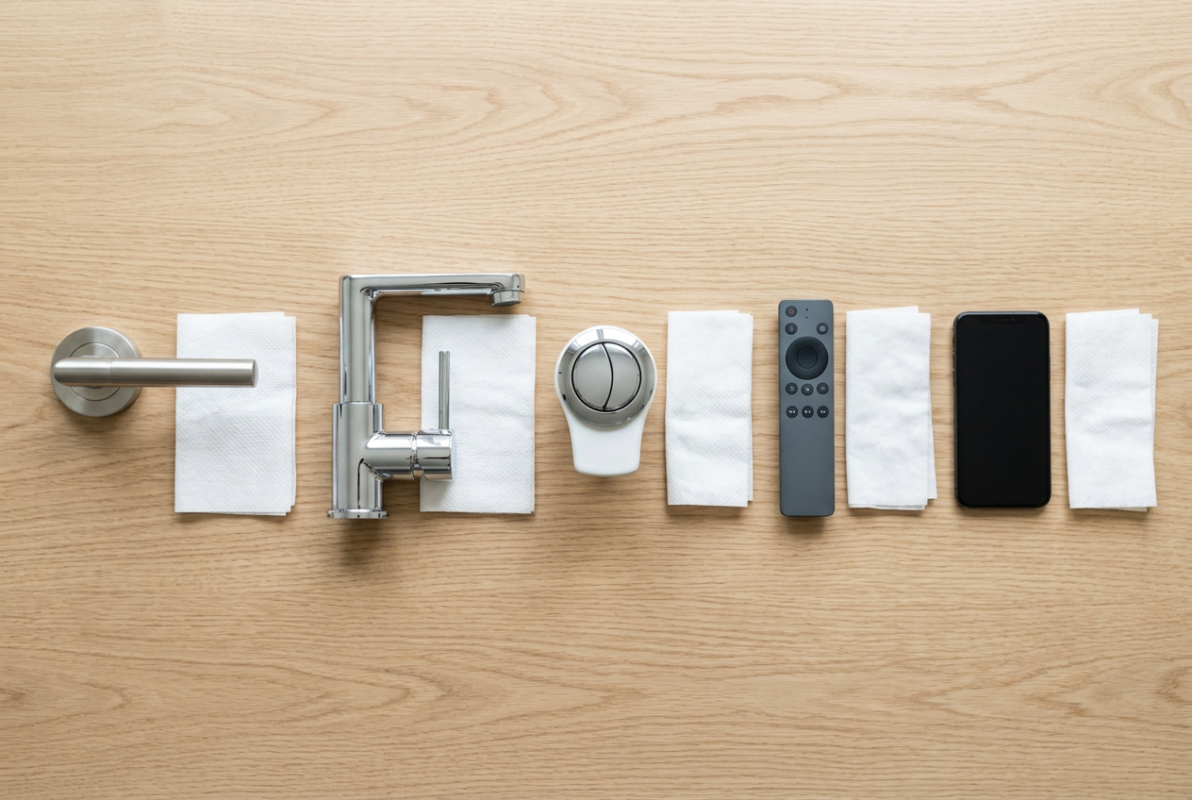
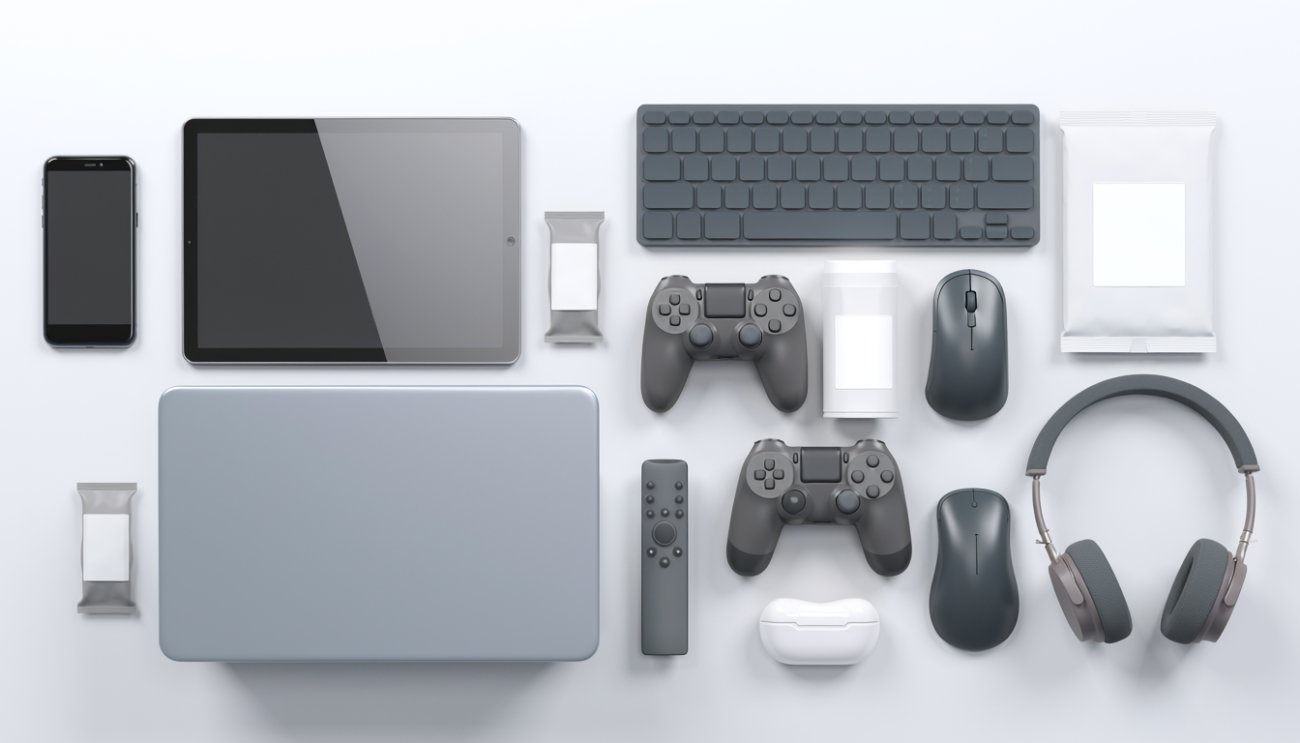
The coating risk varies significantly by surface and device. Use this table as a quick reference before reaching for any wipe:
Device / Surface | Wipe type | Coating risk | Key instruction |
|---|---|---|---|
Smartphone screen | Screen-safe cleaning wipe (ammonia-free, low/no alcohol) | HIGH oleophobic coating | For daily cleaning: use screen-safe wipe only. For illness disinfection: 70% IPA wipe, single use, then resume screen-safe wipes. |
Smartphone body (sides, back) | Disinfecting wipe (any registered formula) | LOW hard casing | Most phone bodies tolerate conventional disinfecting wipes. Avoid ports and speakers. |
Laptop screen / display | Screen-safe wipe (ammonia-free, alcohol-free) | HIGH anti-glare + oleophobic | Never alcohol-based for regular cleaning. Single-use screen wipe, gentle pressure, blower first. |
Laptop keyboard | Disinfecting wipe (lightly damp) | LOW plastic keycaps | Wring out excess moisture. Do not allow liquid to pool between keys. Let dry fully before use. |
Laptop casing / trackpad | Disinfecting wipe (alcohol-free for soft-touch finishes) | MODERATE soft-touch coatings | Alcohol degrades soft-touch rubberised finishes over time. Alcohol-free formula is safer for repeated use. |
Tablet screen | Screen-safe cleaning wipe | HIGH oleophobic coating | Same as smartphone screen screen-safe wipe for daily use, 70% IPA only for illness disinfection if needed. |
Gaming controller | Disinfecting wipe | LOW hard plastic | High-touch surface shared between players. Disinfecting wipe appropriate. Avoid getting liquid in button gaps. |
Wireless earbuds / headphones | Lightly damp cleaning wipe only | HIGH speaker mesh, silicone tips | Never use disinfecting wipes on silicone ear tips or speaker mesh. Damp cloth or cleaning wipe on outer casing only. |
TV remote | Disinfecting wipe | LOW hard plastic | One of the most germ-laden surfaces in any home. Disinfecting wipe fully appropriate on all exterior surfaces. |
Computer mouse and USB peripherals | Disinfecting wipe | LOW hard plastic/rubber | High-touch shared surface. Disinfecting wipe appropriate. Avoid USB connectors. |
Coating risk colour coding: RED = high coating sensitivity, use screen-safe wipe only for regular cleaning. AMBER = moderate risk, alcohol-free preferred. GREEN = low coating risk, conventional disinfecting wipe appropriate with care around ports.
Canadian Options for Screen-Safe Cleaning and Electronics Disinfection
The Canadian market for electronics-specific cleaning wipes is primarily served by US-imported brands at pharmacy and electronics retail chains. Windex Electronics Wipes and Weiman E-Tronic Wipes are the most widely available at Canadian retail but are cleaning products rather than registered disinfectants they clean screens effectively without kill claims.
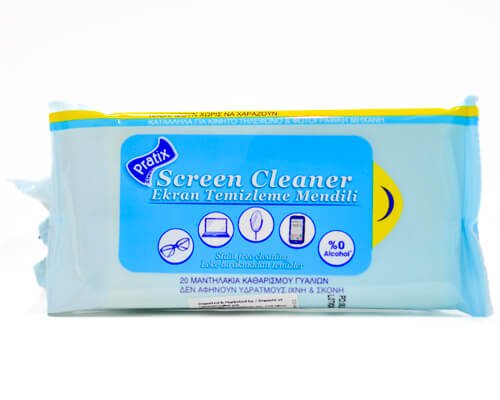
For screen-safe cleaning with a Canadian-available product, Pratix optical and screen cleaning wipes from Health & Hygiene Inc. are specifically formulated for glasses, phone screens, laptop displays, and other optical surfaces ammonia-free, leaving no residue, and available in a multi-pack format that makes them practical for desk and home use across multiple devices.
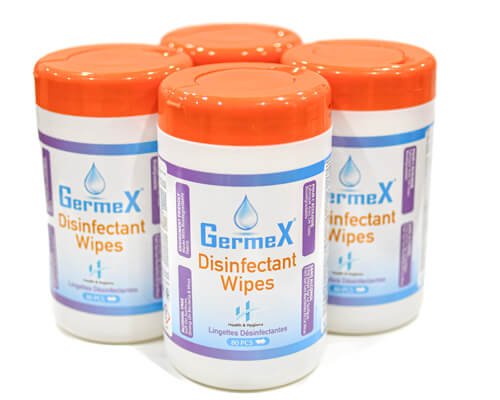
For disinfecting the non-screen surfaces of electronics phone casings, keyboards, remote controls, gaming controllers, and other hard plastic surfaces GermeX disinfecting wipes are alcohol-free, Health Canada registered, and appropriate for the hard plastic and metal surfaces that make up the non-screen exterior of most consumer electronics.
Browse Pratix screen and optical cleaning wipes alongside the full range in our screen and optical collection. For travel-format wipes that keep your phone and glasses clean on the go, explore our travel ready wipes.
A Practical Electronics Cleaning Routine for Canadian Households
- Daily phone screen cleaning Screen-safe wipe (ammonia-free, low/no alcohol, lint-free). One pass from top to bottom, gentle pressure. This handles fingerprints and surface smudges without coating damage.
- Weekly phone disinfection For the phone body (sides, back): any registered disinfecting wipe. For the screen: 70% IPA wipe per manufacturer guidance, single use only, followed by resuming screen-safe wipes for daily cleaning.
- Keyboard and peripheral disinfection Disinfecting wipe, lightly wrung to avoid excess moisture. Wipe key surfaces, avoid pooling liquid between keys and around ports. Let dry fully before use.
- Laptop screen cleaning Screen-safe wipe only, blower first to remove loose debris, gentle single-direction passes. Never alcohol-based as the daily cleaning routine.
- Remote controls and gaming controllers Disinfecting wipe fully appropriate on hard plastic exterior surfaces. These are high-touch and low coating risk. Avoid getting liquid into button gaps and connector ports.
- Shared devices (family tablet, shared laptop) Disinfect with appropriate product by surface type after each user change, not just on a weekly schedule. Shared device surfaces accumulate contamination faster than personal-use devices.
Frequently Asked Questions
Can I use Clorox wipes on my phone?
Apple has confirmed that Clorox Disinfecting Wipes are safe for use on iPhone surfaces including the screen for disinfection purposes. However, this guidance is for disinfection when warranted, not for daily cleaning the quat and alcohol content in Clorox wipes will degrade the oleophobic coating with repeated daily use. For everyday cleaning, use a screen-safe wipe and reserve Clorox-type wipes for periodic disinfection.
What does ammonia-free mean on a screen wipe?
It means the formula contains no ammonia or ammonium hydroxide compounds. Ammonia is the single most damaging common cleaning ingredient for anti-reflective screen coatings it attacks the coating chemically and can cause visible haze or distortion on affected displays. Ammonia-free is the minimum specification for any wipe used on a laptop display or coated phone screen.
Are Windex Electronics Wipes a disinfectant?
No. Windex Electronics Wipes are cleaning products that remove dust, fingerprints, and smudges from screens. They explicitly do not contain disinfecting ingredients and make no kill claims. They are excellent for daily screen cleaning but are not a substitute for a registered disinfectant when germ kill is the goal.
How often should I clean my phone screen?
Daily cleaning with a screen-safe wipe handles fingerprints and smudges and keeps the display clear. Disinfection two to three times per week is appropriate for most users, increasing to daily during illness in the household or after high-contamination environments like commuting or public transit use.
Is it safe to clean earbuds with a disinfecting wipe?
Only on hard outer casing surfaces. Never use a disinfecting wipe on silicone ear tips (which absorb chemicals), speaker mesh (which can be clogged or damaged by moisture and surfactants), or any soft material. A lightly damp cleaning wipe on the outer casing is the appropriate format; the ear tips should be cleaned with a dry lint-free cloth or replaced periodically.
Electronics cleaning and electronics disinfection are two different jobs requiring two different products for coated screen surfaces. A screen-safe wipe (ammonia-free, acetone-free, low/no alcohol, lint-free) handles daily cleaning without damaging coatings. A registered disinfectant handles germ kill when it is genuinely needed applied to non-screen surfaces freely, and to screen surfaces occasionally per manufacturer guidance.
The device-by-device table in this guide is the practical reference that makes the decision straightforward: high coating-risk surfaces get the screen-safe product, low coating-risk surfaces get the disinfecting wipe, and the keyboard and controller in between get careful application with attention to moisture near ports. Following this protocol protects both the device and the hygiene outcome.
Explore the full range of screen-safe and optical cleaning wipes in our screen and optical collection, or browse compact travel-format options in our travel ready wipes range for keeping devices clean wherever you are.