
Are Disinfectant Wipes Safe? What Every Canadian Family Should Know

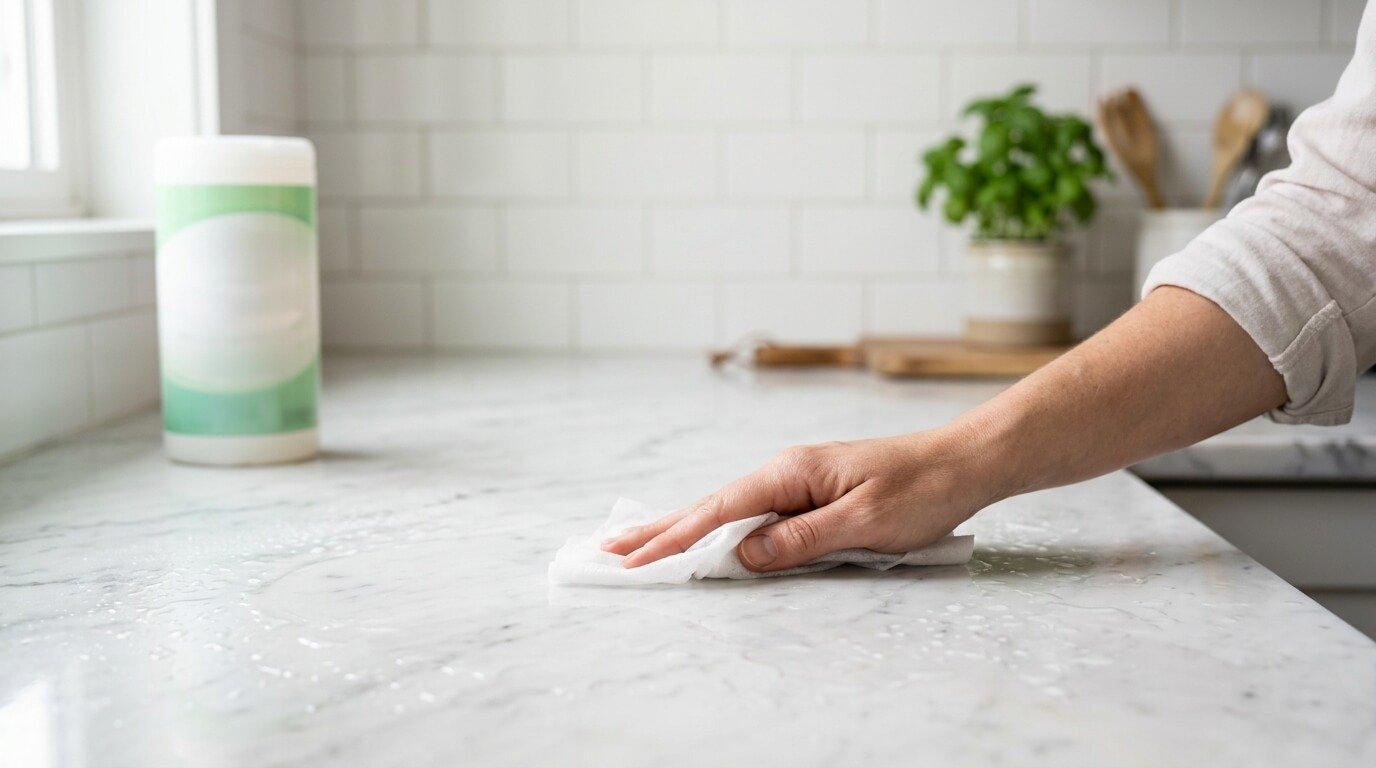
It's a question worth asking honestly, because the answer isn't a flat yes or no it depends entirely on how a wipe is used, what's in it, and who's using it. Disinfectant wipes are genuinely safe for their intended purpose: wiping hard, non-porous surfaces by hand. The label warnings that sometimes make parents nervous “Keep Out of Reach of Children,” ingredient names that look intimidating are standard, required language, not a sign that something is dangerously wrong with the product.
That said, there are real, specific things worth understanding if you're using disinfectant wipes around kids, food, or sensitive skin every day. This guide breaks down exactly what's actually risky, what isn't, and what to look for in a wipe that's genuinely built for a household with children in it.
The Honest Answer: Yes, When Used As Directed
Poison control centers, which track real-world incidents rather than theoretical risk, are consistently clear on this point: disinfecting wipes are fairly safe when used by hand on surfaces as intended. They are not meant to be mouthed, chewed, or swallowed and the handful of real incidents on record (a child wiping their own face with a wipe, for example) tend to result in mild, short-lived irritation rather than anything serious, typically resolved by simply washing the area with soap and water.
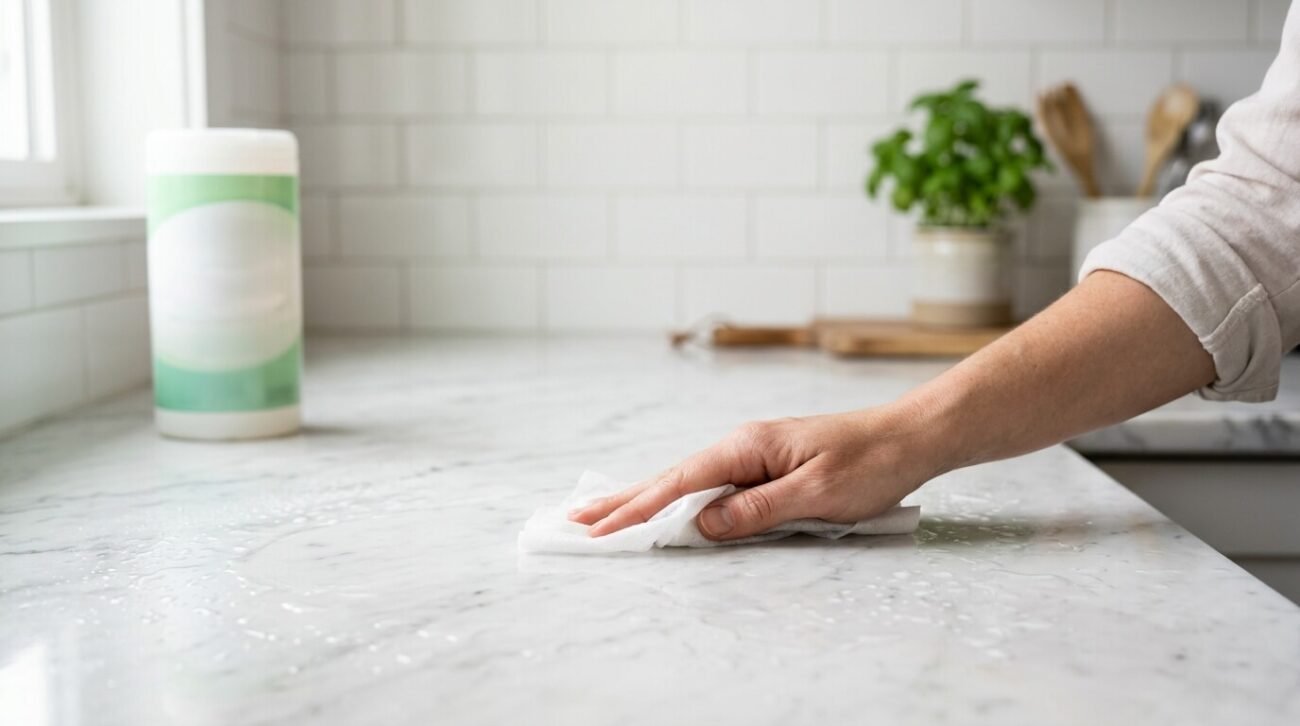
“Used as directed” is the entire qualifier doing the work in that sentence. It means: wipe the surface, let it sit wet for the labeled contact time, and don't let the wipe (or the surface immediately after) come into contact with a mouth, eyes, or broken skin until any rinse step if required has been completed. Used this way, registered disinfecting wipes are one of the most common and well-tolerated household products in Canada.
But that same evaporation speed is also alcohol's biggest limitation as a surface disinfectant. Earlier in this series we covered why contact time keeping a surface visibly wet for a set number of seconds or minutes is the actual mechanism that determines whether a disinfecting product works. Alcohol's fast evaporation works against this. In a warm kitchen, near an open window, or on a porous material that soaks up liquid quickly, an alcohol-based wipe can dry out before the labeled contact time is reached, meaning the kill claim on the package was never technically met.
Alcohol is also flammable, which rules it out for use near open flames, stovetops, or certain electronics with exposed components. And because alcohol is genuinely toxic if ingested in any meaningful quantity, manufacturers and pediatric safety guidance both recommend caution using alcohol-based wipes on any surface a small child might put in their mouth shortly afterward high chair trays, toys, teething surfaces.
Why the 'Keep Out of Reach of Children' Warning Doesn't Mean Danger
This is one of the most misunderstood labels in the entire cleaning aisle. Nearly every registered disinfectant regardless of brand, ingredient, or strength carries some version of this warning, because the standard assumes a worst-case scenario: a child accessing the product unsupervised and treating it like a toy, a snack, or a toothbrush. It is a precaution built into the regulatory label requirement itself, not a specific red flag about any one product being more dangerous than another.
In practice, this warning exists for the same reason dish soap, toothpaste, and sunscreen all carry similar child-safety language: any product not designed to be ingested deserves a label saying so. It does not mean a wipe is unsafe to use in a home with children it means the product, like nearly everything else under a kitchen sink, should be stored where a young child can't access and experiment with it unsupervised.
This slower evaporation also makes alcohol-free wipes noticeably gentler. They don't carry the fire risk alcohol does, they're less likely to dry out or damage finished surfaces and certain plastics with repeated use, and they tend to be better tolerated by sensitive skin since there's no rapid solvent action drawing moisture out of the surface they're used on.
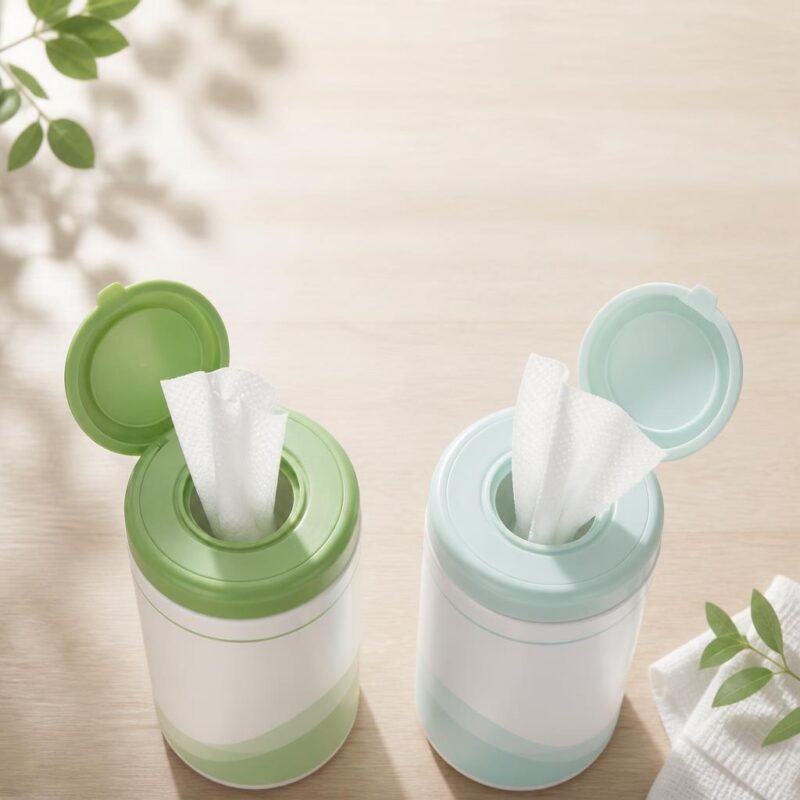
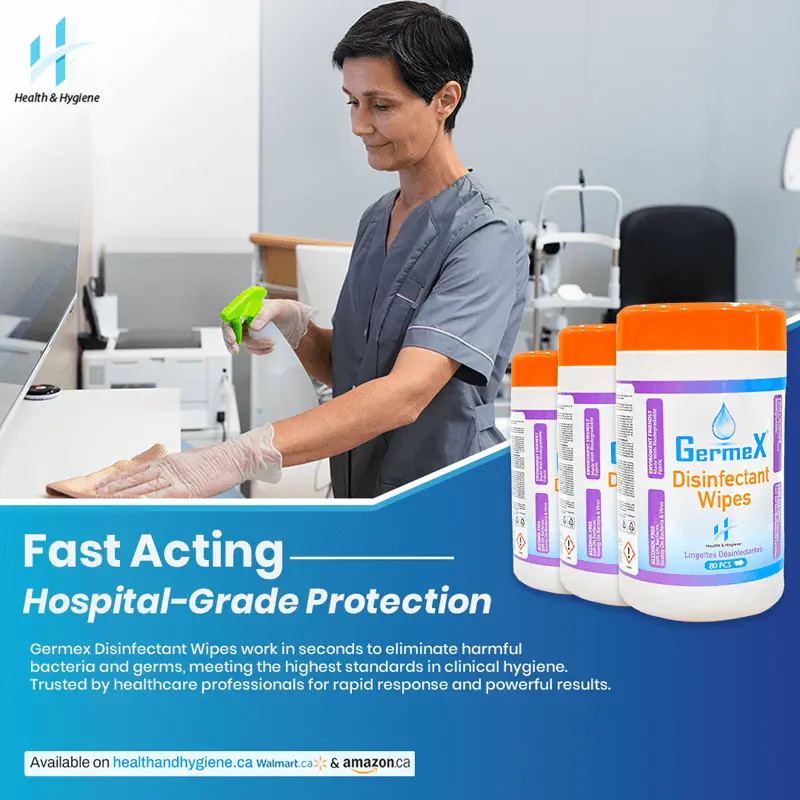
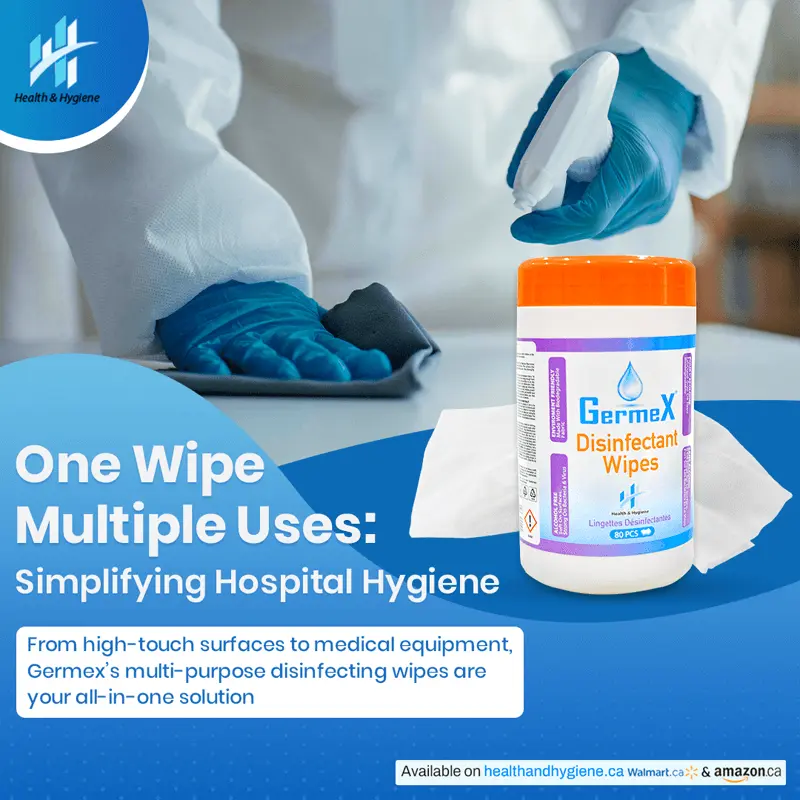
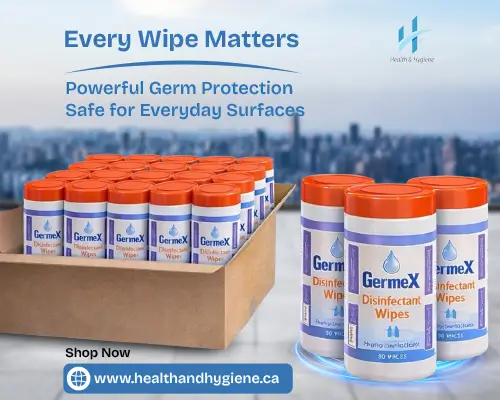
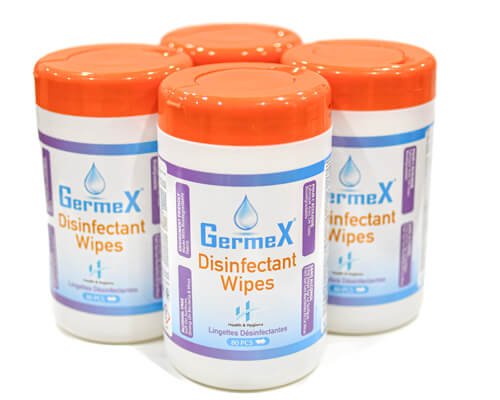
This is the formulation category GermeX sits in. Every GermeX wipe is built on an alcohol-free, Health Canada–registered disinfecting formula, which is part of why it's positioned as safe for food-contact surfaces, gentle for daily household use, and suitable around children without the same caution flags that come with alcohol-based products. You can see the full range in our disinfecting wipes collection.
The Quats-and-Kids Question, Honestly Addressed
This is worth tackling directly because it's a real, often-cited concern, not a fringe worry. Quaternary ammonium compounds commonly shortened to “quats” are one of the most widely used active ingredients in disinfecting wipes, and some pediatric researchers have raised questions about repeated, high-frequency exposure to quats, particularly in settings like classrooms where wipes are used many times a day around children.
The nuance that often gets lost in headlines: this is a question of frequency and exposure level, not a claim that quats are unsafe to use at all. A wipe used a few times a day on a kitchen counter is a very different exposure profile than industrial-frequency use in a commercial setting. Still, for parents who want to minimize any frequent, repeated exposure especially on surfaces young children are near constantly, like high chairs, changing tables, and play areas choosing a gentler, alcohol-free formula is a reasonable and easy precaution, not an overreaction.
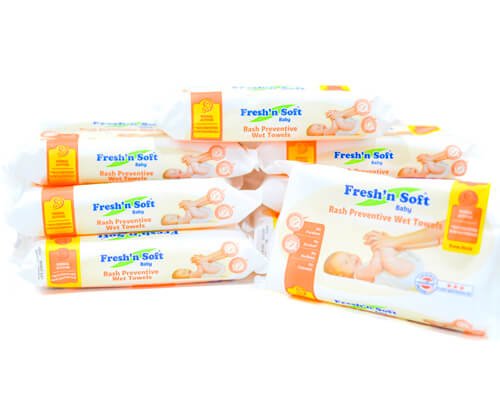
This is the specific need GermeX wipes are formulated to address. Every GermeX wipe is alcohol-free and Health Canada–registered, designed to be gentle enough for the high-frequency, everyday surfaces a family with young kids actually deals with without sacrificing the verified disinfecting claims on the label. You can explore the full lineup built for this in our baby care collection.
What About Food-Contact Surfaces?
Not every disinfecting wipe is labeled safe for surfaces that touch food, and this is one detail worth actually checking rather than assuming. Many disinfectant formulas particularly those built around standard-strength quats require a rinse step with potable water if the surface will have contact with food afterward. Skipping that rinse step isn't dangerous in a dramatic sense, but it does mean residue from the disinfectant could end up on food prepared on that surface, which is exactly what the rinse instruction is there to prevent.
This is a genuinely useful thing to check on any wipe's packaging before using it on a cutting board, dining table, or high chair tray: does the label require a rinse for food contact, or is it specifically formulated to be food-surface safe without one? Wipes that skip the rinse requirement like GermeX are formulated specifically so a kitchen counter or high chair tray can be wiped down and used again without an extra step, which matters most in households where that surface gets used multiple times a day.
Skin Contact: What's Actually Mild vs. What to Watch For
Disinfecting wipes are designed to be used by hand, and for most people, brief hand contact during normal use causes no issue at all. Where irritation can show up is with repeated, prolonged skin contact someone using wipes for hours during a cleaning job without gloves, for example or with wipes formulated for harsher applications, like bathroom-specific disinfecting wipes, which tend to be stronger than wipes designed for kitchen or general surface use.
If a wipe causes any redness, dryness, or irritation with normal use, that's a sign to switch to a gentler, alcohol-free formula rather than push through it. People with sensitive skin, eczema, or young children who may help with light household tasks are the groups most likely to notice a difference between a harsher alcohol- or bleach-based formula and a gentler alcohol-free one.
Five Practical Safety Rules for Households With Kids and Pets
- Store wipe canisters closed and out of reach treat them the same way you'd treat any product not meant to be eaten, like dish soap or toothpaste
- Always observe the labeled contact time, and rinse food-contact surfaces if the product instructs you to
- Choose an alcohol-free, food-surface-safe formula for high chairs, changing tables, and anywhere young children are constantly present
- Wash your hands after extended wipe use, even if you used the product correctly this is standard practice, not a sign anything went wrong
- If a wipe causes any skin irritation with normal use, switch to a gentler formula rather than continuing to use a product that doesn't agree with your skin
Frequently Asked Questions
Can I use disinfectant wipes around my baby?
Yes, when the wipe is used as directed on surfaces not directly on the baby's skin unless the product is specifically labeled for that use. Choose an alcohol-free, food-surface-safe formula for high chairs, toys, and changing areas.
Are non-toxic wipes actually weaker disinfectants?
Not necessarily. “Non-toxic” generally refers to a gentler ingredient profile and lower irritation risk, not reduced disinfecting power. A properly registered alcohol-free wipe can carry the same verified kill claims as a harsher formula.
What should I do if a child accidentally puts a wipe in their mouth?
Most documented cases result in mild irritation at most. Rinse the mouth with water and contact a poison control center or your healthcare provider for guidance specific to the product used keep the packaging on hand so you can reference the exact ingredients if asked.
Is it safe to use disinfectant wipes every day?
Yes, for surfaces that need it though for simple everyday tidying with no contamination risk, a basic cleaning wipe is often enough, and reserving disinfecting wipes for situations that actually call for them (raw food contact, illness in the household) reduces unnecessary chemical exposure.
How to Actually Read a Wipe Label Before You Buy
Most of the safety information that matters is printed right on the canister, but it's easy to skip past it. Three things are worth checking every time: first, whether the product carries a Health Canada DIN, confirming it's a registered disinfectant rather than a general-purpose cleaning wipe. Second, the active ingredient list look specifically for whether it's alcohol-based, quat-based, or an alcohol-free alternative, since this tells you about gentleness and contact-time behavior, not effectiveness. Third, whether the label specifies food-contact surface safety and whether a rinse step is required.
Taking thirty seconds to check these three things before a wipe goes in your cart tells you almost everything you actually need to know far more than marketing language like “family safe” or “gentle” on the front of the package, which aren't regulated claims and can mean very different things from one brand to the next.
Disinfectant wipes are safe for Canadian families when used as directed the warnings on the label are standard regulatory language, not a sign of hidden danger. The real, practical decision is choosing a formula that fits how your household actually uses it: an alcohol-free, food-surface-safe wipe for high-frequency areas like kitchens and anywhere kids are present, with sensible storage and handling habits around it.
Browse our baby care collection for gentle, family-safe wipes, or explore the full disinfecting wipes range for everyday surfaces around your home every GermeX formula is alcohol-free and Health Canada registered.