
Disinfectant Wipes for Cleaning The Full Guide to Safe Surface Use

Most Canadians who use disinfectant wipes are doing it in a way that is at least partially wrong not because they are careless, but because nobody has told them the specifics. Which surfaces. Which technique. How long to leave it wet. What to do with the wipe between surfaces. How often is actually necessary versus how often feels thorough. These details are on the label, but in language designed for regulatory compliance, not practical household guidance.
This is the guide those labels should have included. It covers correct technique, contact time, the cross-contamination mistake that makes cleaning actively counterproductive, how to build a routine that is actually sustainable, and how choosing the right formula makes all of the above easier rather than harder. By the end you will have a clear, practical system for using disinfectant wipes in your Canadian home that takes less time than you currently spend and works better.
Cleaning vs. Disinfecting: The Step Most People Skip
Before picking up a wipe, it is worth being clear on what job it is doing. Cleaning removes visible dirt, grease, crumbs, and debris from a surface through friction and a detergent action. Disinfecting kills pathogens bacteria, viruses, and fungi through chemical action. These are two different jobs, and one does not automatically accomplish the other.
A disinfectant wipe applied to a visibly dirty surface has a problem: the debris on the surface physically blocks the active ingredient from reaching the pathogens beneath it. The wipe spends its active ingredient on the visible mess rather than on the microbial layer. The result is a surface that looks clean and smells like disinfectant but may not have been effectively disinfected at all.
The correct sequence is: clean visible mess first (a basic damp cloth or paper towel), then disinfect with a wipe on a clean surface. For most everyday kitchen and bathroom surfaces where there is no heavy mess, a single disinfecting wipe handles both steps well enough in a single pass. Where there is visible grease, food residue, or soil, a two-step approach is the one that actually delivers what the label promises.
Contact Time: The Most Overlooked Step in Every Disinfecting Routine
Every registered disinfectant has a contact time the duration the surface must remain visibly wet for the kill claim on the label to be met. This is not a suggestion. It is the tested condition under which the product’s efficacy was verified. Use it any other way and you are not using it as tested.
Contact times vary by product and pathogen. A wipe that claims to kill influenza virus in 30 seconds is a different product from one that claims the same against a harder-to-kill organism in 4 minutes. In both cases, if the surface dries before that time is up, the condition of the test has not been met in your kitchen, regardless of what the label says.
In practice, most Canadian households use disinfecting wipes with a quick wipe-and-move technique: surface wiped, surface immediately used. This is fine for everyday maintenance cleaning where the goal is reducing surface contamination rather than achieving a certified kill. For situations where disinfection actually matters after handling raw poultry, during an illness in the household, before food preparation on a surface used for other tasks letting the surface stay visibly wet for the full contact time is the difference between disinfecting and cleaning.
For alcohol-free formulas like GermeX, the contact time is supported by a slower evaporation rate than high-alcohol wipes meaning the surface stays wet longer naturally, which makes achieving the full contact time under real household conditions more reliable than with fast-evaporating alcohol-based alternatives.
The Cross-Contamination Mistake That Makes Cleaning Counterproductive
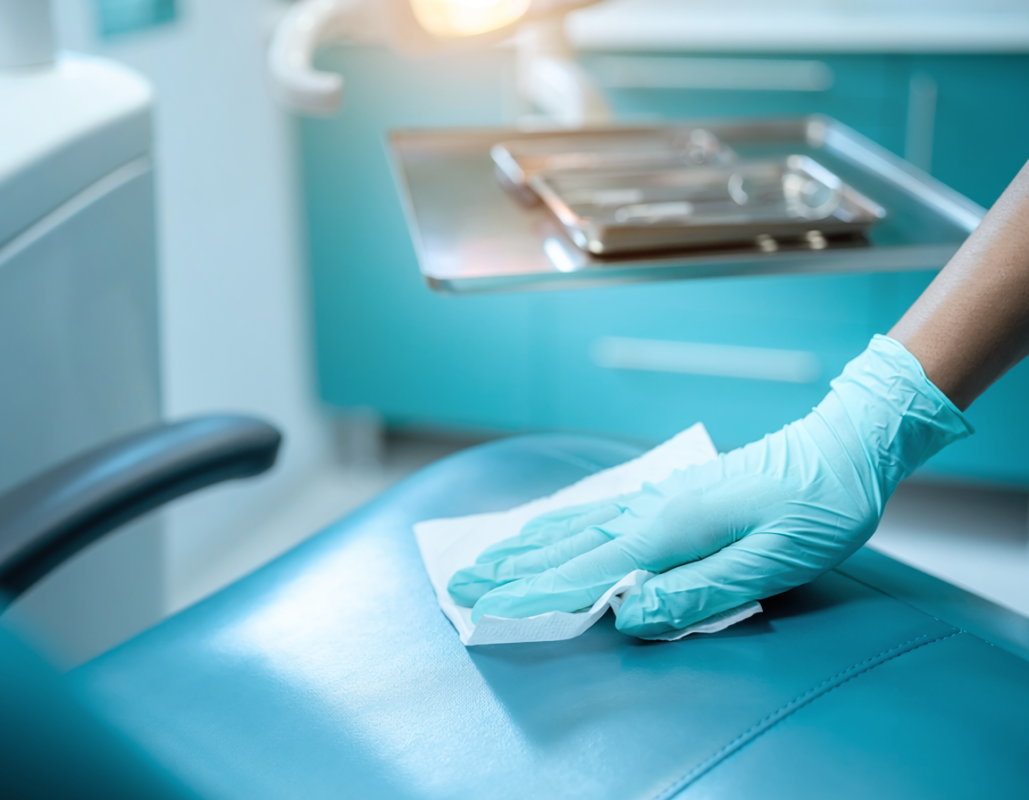
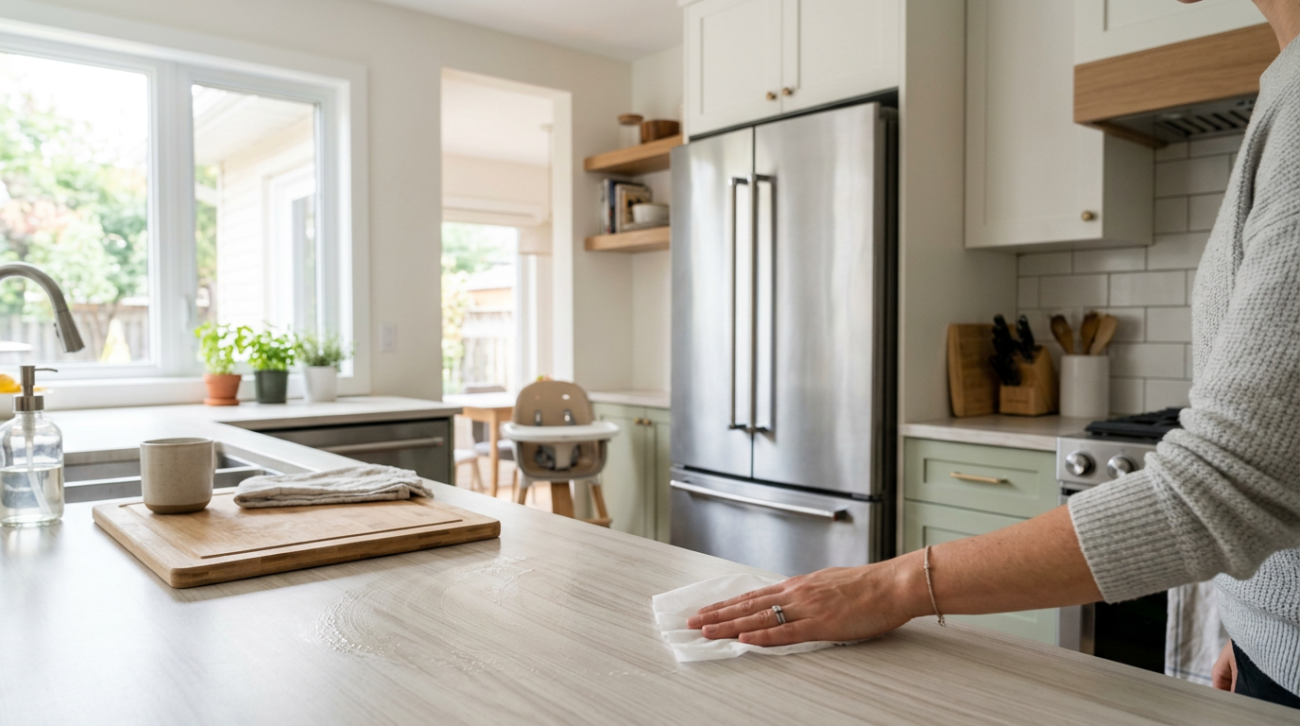
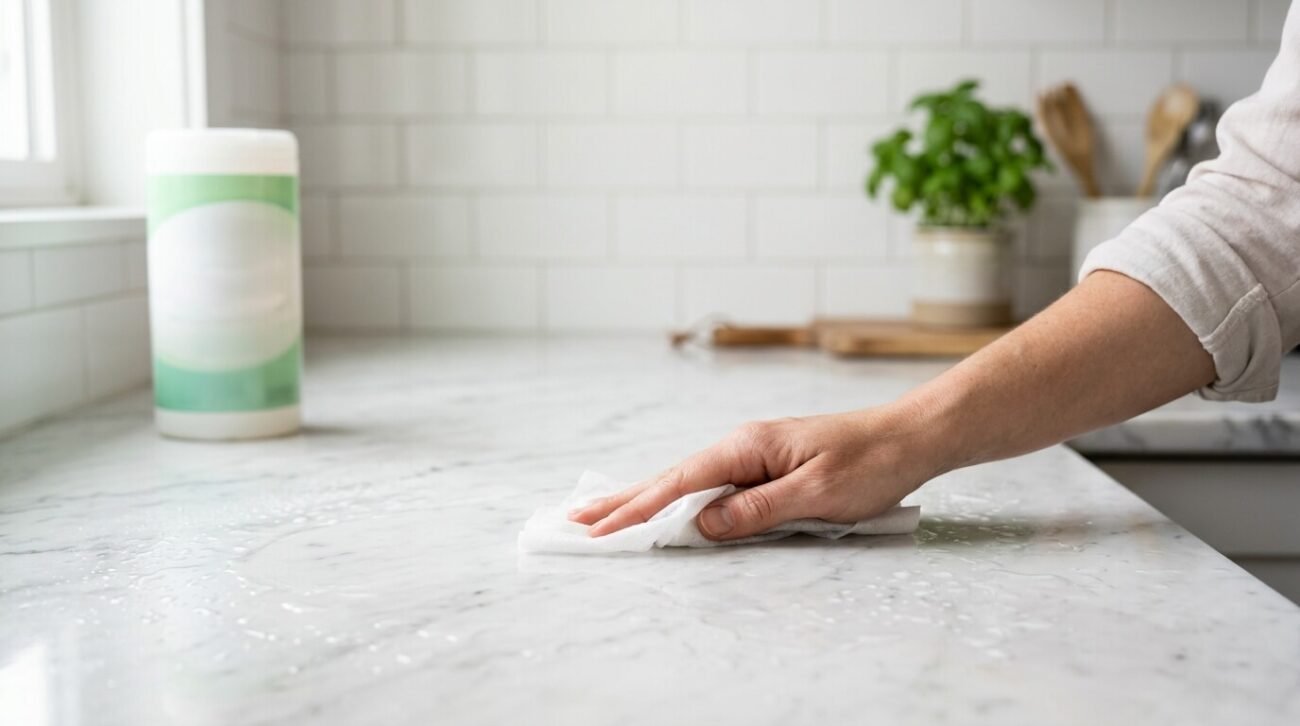
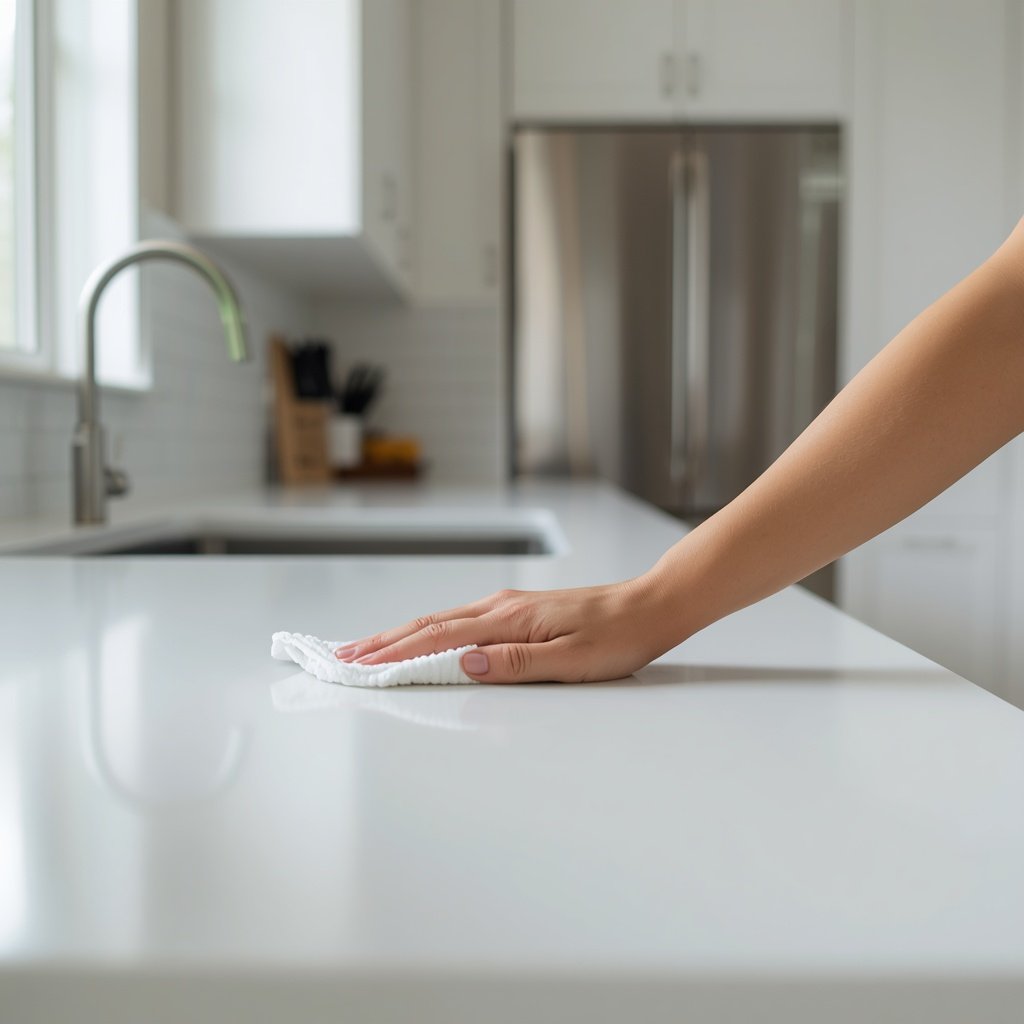
The wiping motion matters more than most people expect. An S-shaped or overlapping horizontal pass pattern, starting at one end of the surface and working consistently to the other, ensures full coverage and avoids re-contaminating areas that have already been wiped. A circular scrubbing motion or random passes tends to move contamination around the surface rather than lifting it uniformly off.
The pressure applied should be firm but not aggressive. The goal is contact between the wet wipe and the surface the active ingredient does the work, not the friction. Heavy scrubbing on the first pass is appropriate for loosening adhered residue before disinfection, but it is not what delivers the kill claim on the label. The chemical does.
For surfaces with texture grout lines between tiles, the raised edges around a sink basin, the recessed areas on appliance handles a single pass will not cover the textured areas adequately. A second pass with gentle pressure in the opposite direction, or a wipe folded to a point for the recessed areas, covers these spots. High-touch surfaces with texture are worth this extra attention because the texture traps contamination in exactly the areas a quick single pass misses.
Correct Wiping Technique: How to Actually Do It Right
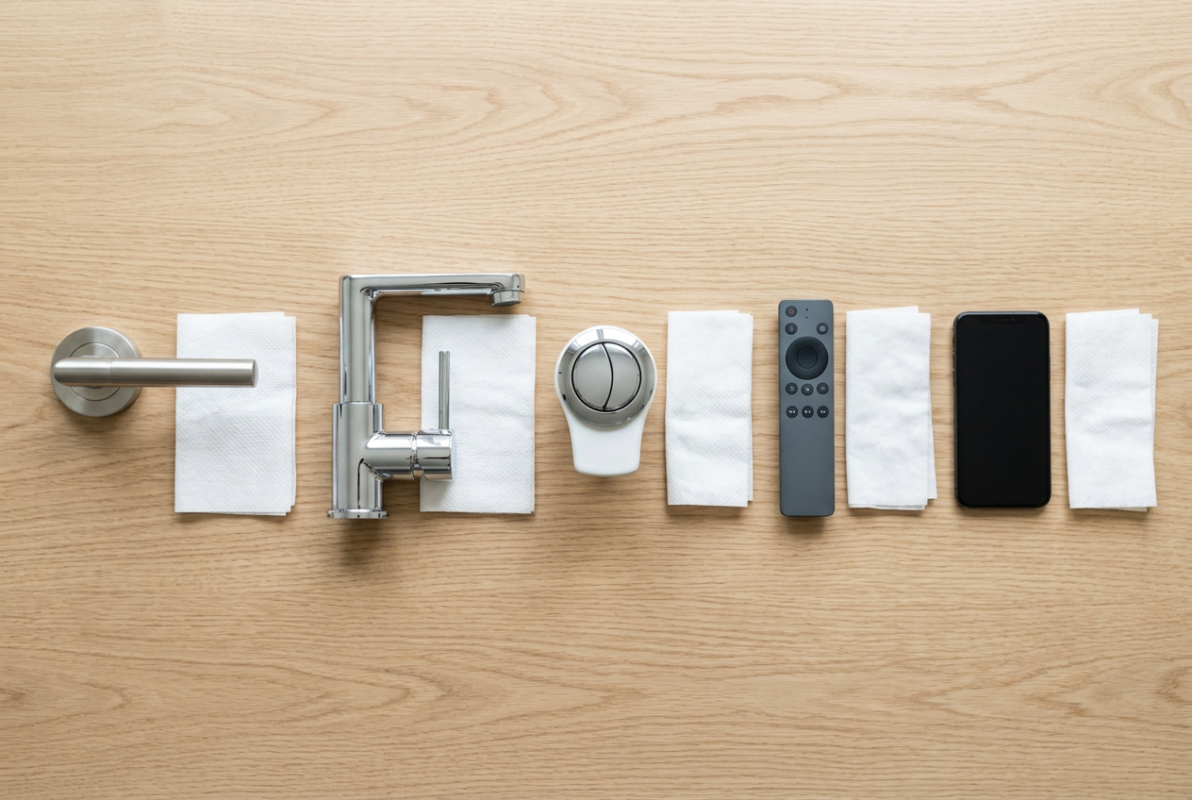
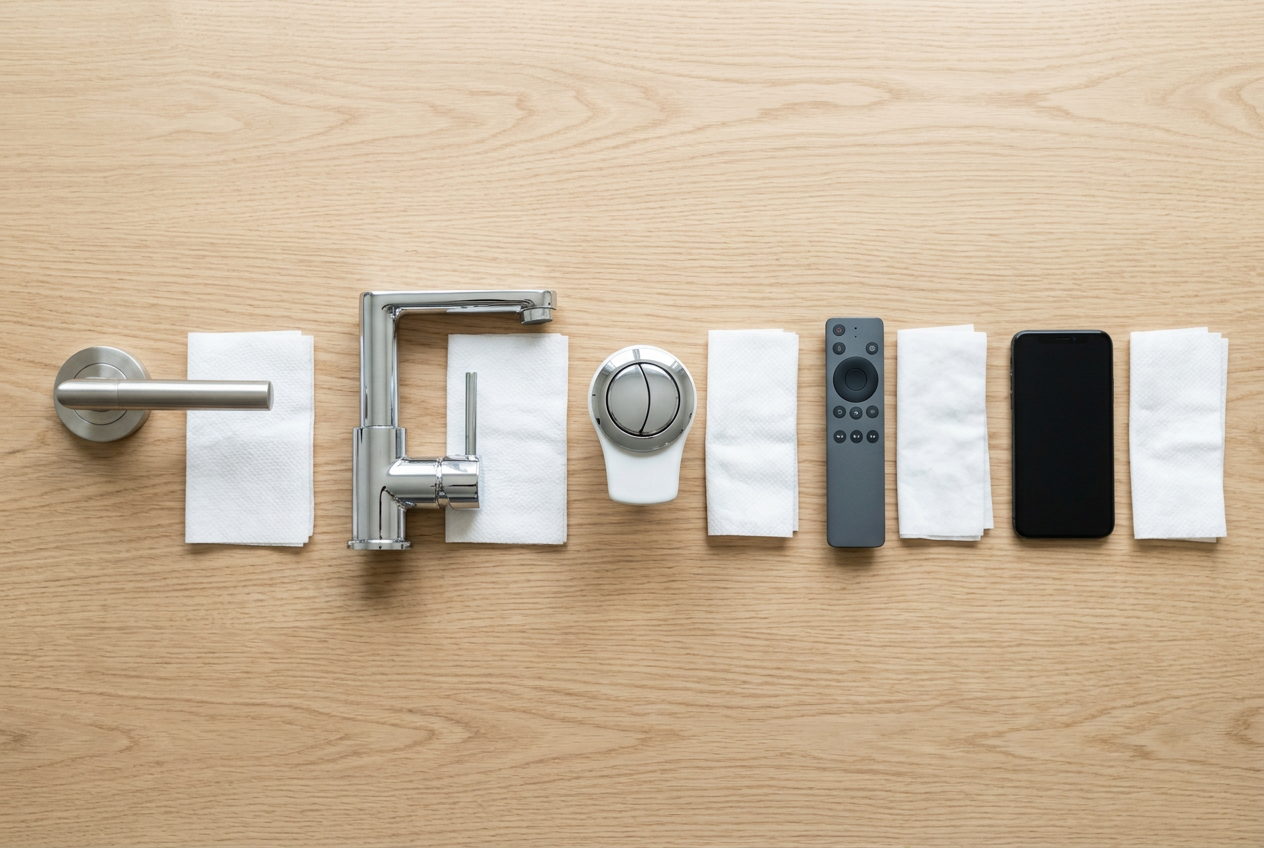
- Door handles and light switches The highest-value targets in any room. A quick wipe of door handles and light switches in a household where anyone has been ill is one of the most effective surface hygiene interventions you can do.
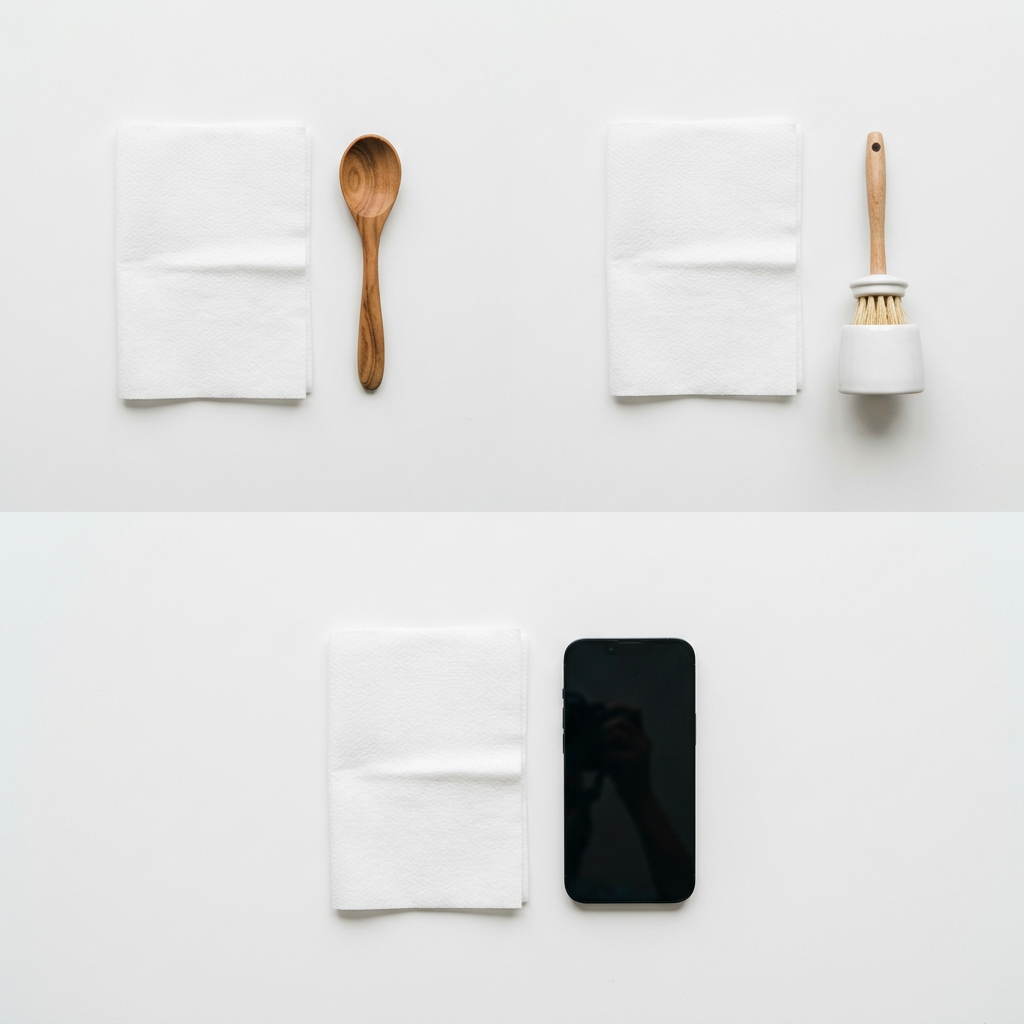
- Remote controls and gaming controllers Hard plastic, non-porous, and touched constantly. Use a wipe that is not dripping wet wring out any excess before wiping around buttons and ports to avoid getting liquid into gaps.
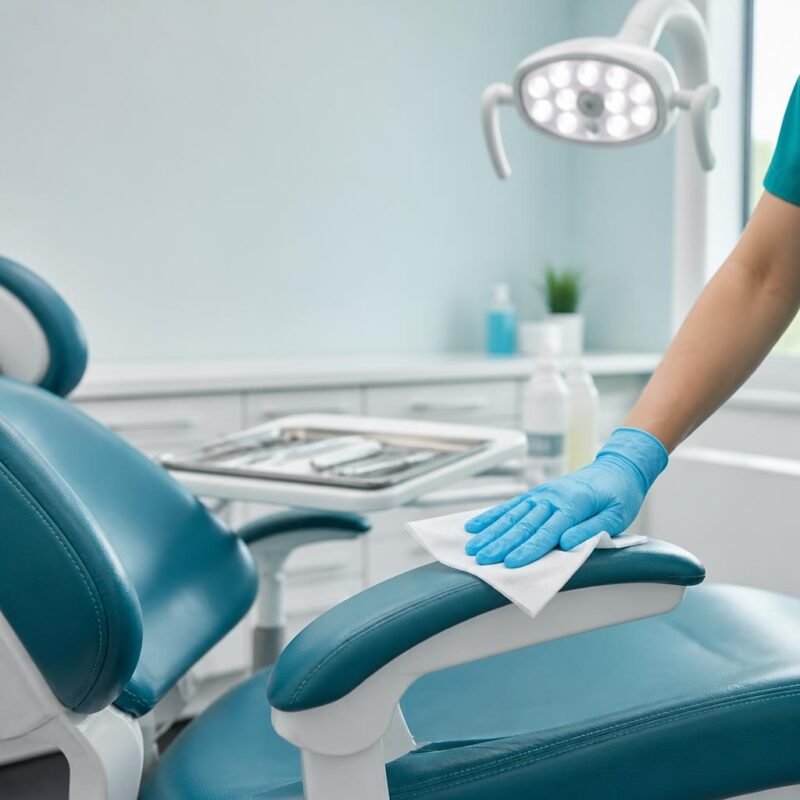
- Hard plastic chair arms and desk surfaces Office desks, plastic chair arms, and hard surfaces in shared spaces are appropriate targets. In shared home offices or households with school-age children, these are surfaces worth adding to a regular wipe-down routine.
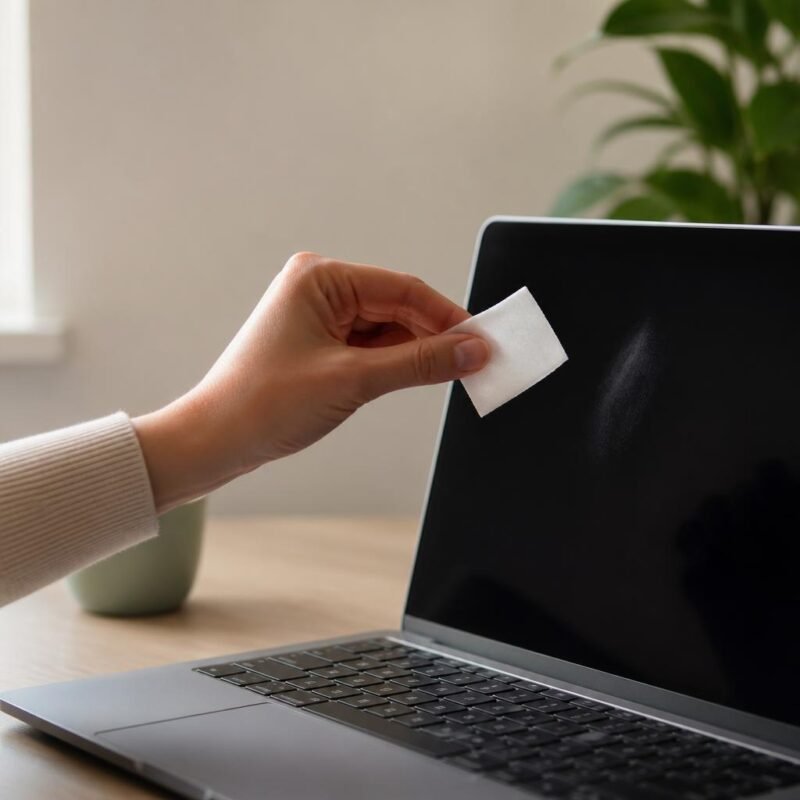
- Keyboard and desk phone Hard plastic surfaces of the keyboard housing can be wiped with care. Avoid getting liquid into the gaps between keys and do not use an alcohol-based wipe on any screen surface, including laptop displays. For screens specifically, use a dedicated screen-safe wipe.
What to avoid in living areas: upholstered furniture (sofas, fabric chairs), carpets and rugs, leather or faux-leather surfaces, painted walls, and any wood surface that is not sealed with a hard non-porous finish. Alcohol and quat-based formulas damage all of these with repeated contact.
Building a Disinfecting Routine That Is Actually Sustainable
The most common reason household disinfecting routines fail is that they are built on ambition rather than habit. A routine that requires 45 minutes of thorough cleaning every surface every day works for the first week and then collapses. A routine built around the surfaces that actually matter, at the frequency that matches the real risk, is the one that gets maintained.
The table below organises a practical Canadian household disinfecting routine by frequency and surface priority:
Frequency
Surfaces to target
Why this frequency
Daily
Kitchen counters after food prep, tap handles, toilet handle, door handles, phone
These surfaces are touched dozens of times daily and are the primary pathways for household germ transmission
Every 2-3 days
Bathroom sink and basin, light switches, appliance handles, remote controls
High-touch but not at kitchen/toilet frequency regular attention keeps microbial load low without over-cleaning
Weekly
Desk and workspace surfaces, chair arms, car steering wheel and controls, shared electronics
Touched regularly but by fewer people weekly disinfecting maintains a clean baseline without daily effort
During illness
All high-touch surfaces in the home, every 12-24 hours while symptoms are active
Illness transmission is at its highest in the first 48-72 hours increased frequency during this window reduces household spread significantly
After raw food handling
Any surface that contacted raw meat, poultry, or eggs immediately after preparation
Foodborne pathogens like Salmonella and E. coli survive on surfaces and can transfer to ready-to-eat food without visible contamination
How Formula Choice Changes Everything About This Routine
The choice of disinfecting wipe formula affects every step in the guide above. A high-alcohol formula evaporates faster, which shortens the practical window for contact time compliance in real household use. Strong quat-based formulas require rinsing on food-contact surfaces, which adds a step to the kitchen and high-chair routine most people skip. Harsh formulas that damage certain surfaces require more decisions about which wipe goes where.
An alcohol-free, food-contact-approved, Health Canada registered formula simplifies the whole routine. No evaporation race against the contact time. No rinse step on the kitchen counter or high chair tray. No damage risk on the surfaces most households actually need to clean regularly. The routine becomes: wipe, wait for the labeled contact time, done on any appropriate hard non-porous surface in the home without formula-specific exceptions.
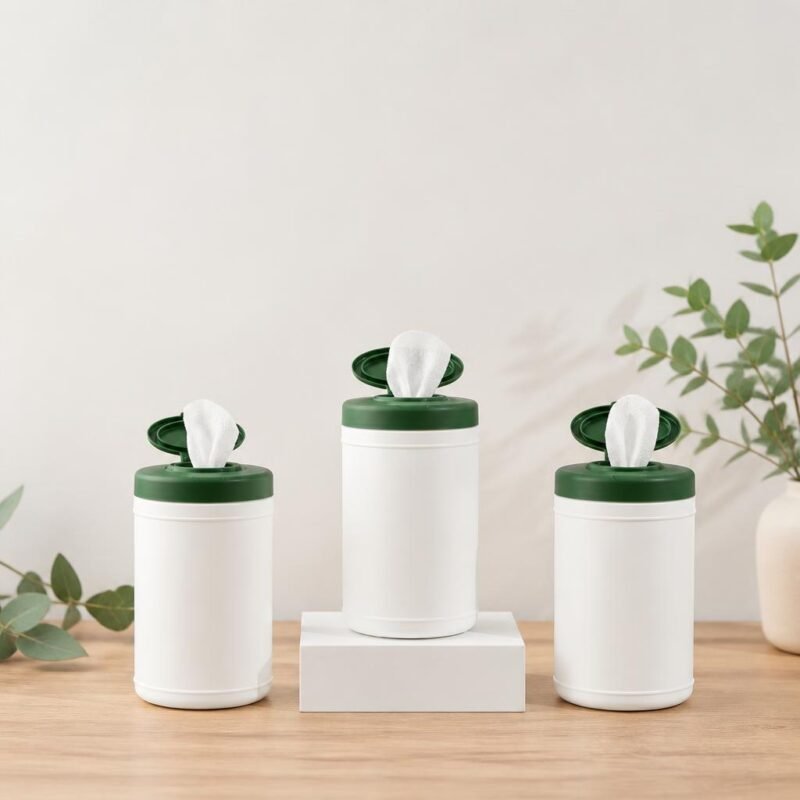
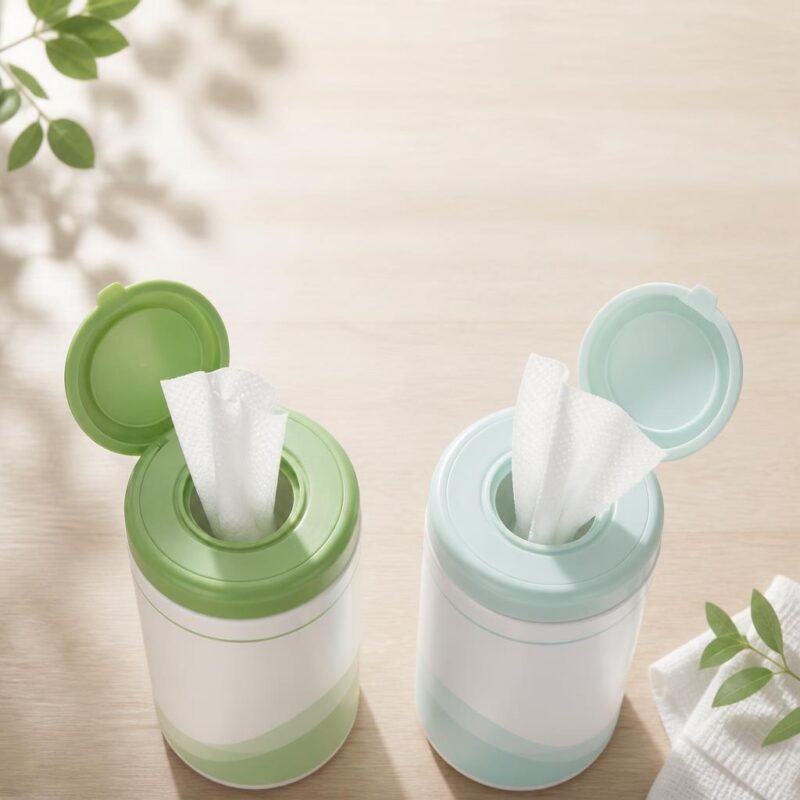
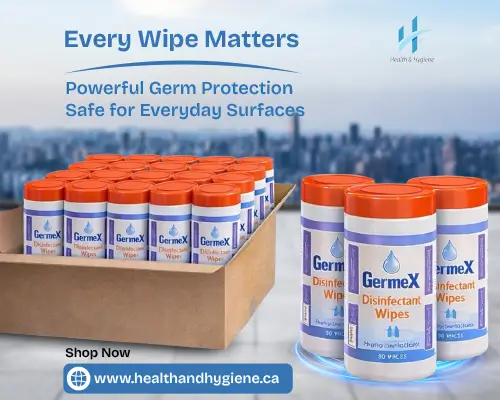
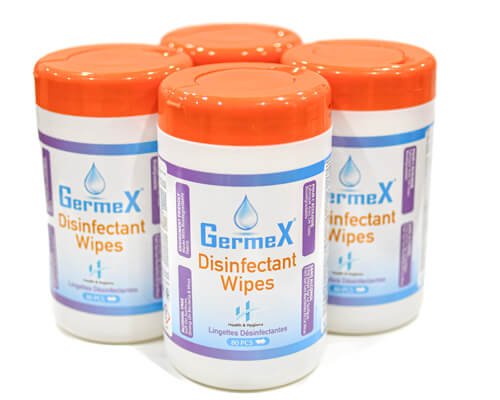
This is exactly how GermeX disinfecting wipes are formulated: alcohol-free, Health Canada DIN registered, and approved for food-contact surfaces without rinsing. Available in a 4-canister pack with 80 wipes per canister enough for a full month of daily kitchen and bathroom use for a typical Canadian household. Order directly from the GermeX 4-canister pack page, or browse the complete disinfecting wipes collection to see all available formats.
A Note on Disinfecting During Illness
The routine above covers normal household maintenance. When someone in the household is ill with a cold, flu, gastroenteritis, or any contagious condition the frequency and priority of surface disinfecting should increase significantly during the active illness period.
The surfaces worth focusing on during illness are the ones the sick person touches most: bathroom surfaces they use, the toilet handle and seat, tap handles in both bathroom and kitchen, any surfaces they touch in common areas, and their personal devices if shared. Disinfecting these surfaces twice daily during active illness morning and evening meaningfully reduces the surface-contact transmission route within the household.
In a household with a sick child, the additional focus areas are toys and play surfaces the child has recently handled, the high chair tray if still in use, and any cushion or surface where the child sits or lies during the day. For soft surfaces where a disinfecting wipe is not appropriate, a fabric-safe sanitizing product or hot-wash laundry cycle is the alternative.
Frequently Asked Questions
How do I know if I have left the wipe on long enough?
The surface should remain visibly wet for the contact time stated on the product label. If the surface dries before that time, the contact time has not been met. On alcohol-free formulas, the surface stays wet longer than on high-alcohol wipes, making it easier to achieve the full contact time under normal household conditions.
Can I use one wipe on my whole kitchen?
For light daily maintenance where the goal is reducing surface contamination rather than certified disinfection, a single wipe can cover a standard kitchen counter in one pass. For proper disinfection after raw food handling or during illness use a fresh wipe for each major zone and replace when the wipe begins to dry out.
Is it safe to use disinfecting wipes around food without rinsing?
It depends entirely on whether the specific product is approved for food-contact surfaces without a rinse step. Check the label for food-contact surface instructions. GermeX is approved for food-contact surfaces without rinsing. Many other products are not, or they require a rinse step before food contact.
How many wipes do I need per week for a typical household?
For a household of four following the routine in this guide, approximately 15–20 wipes per week covers daily kitchen surfaces, every-other-day bathroom surfaces, and one weekly pass of door handles and shared devices. A 4-canister pack of 80 wipes each covers approximately one month of this routine.
Does the wiping motion actually matter?
Yes. An overlapping S-pattern or consistent horizontal passes from one end of the surface to the other ensures full coverage and avoids recontaminating areas already wiped. Random or circular motions tend to redistribute rather than remove surface contamination.
Using disinfectant wipes correctly is not complicated but it is more specific than most people have been told. Clean visible mess before disinfecting. Allow the full contact time. Use a separate wipe for each surface rather than spreading contamination through the home. Wipe in consistent overlapping passes rather than random motion. Build a routine around the surfaces and frequencies that match actual risk, not the ones that feel most thorough.
The formula you choose either supports or complicates every one of those steps. An alcohol-free, food-contact-approved, Health Canada registered wipe removes the common exceptions and simplifies the routine for every surface in a Canadian home.
The GermeX 4-canister pack 320 wipes, Health Canada registered, alcohol-free, food-contact approved is built for exactly this kind of everyday household disinfecting routine. Order online with free shipping on orders over $50 across Canada, or browse the full disinfecting wipes collection for all available formats and pack sizes